


Blog
Common Errors in Installing Wooden Rafter That Can Weaken Structural Integrity

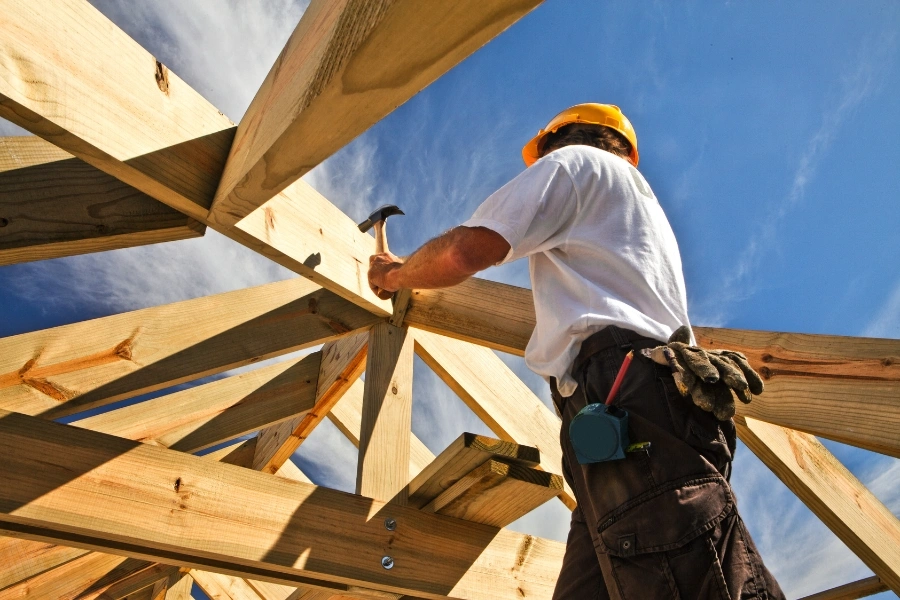
When building a house or other structure, many people focus primarily on main materials such as concrete, steel, or roof tiles. However, supporting components like wooden rafter also play a crucial role in maintaining structural stability, particularly in roof frames, ceilings, and various other construction projects.
Unfortunately, there are still many installation mistakes that are considered trivial but can actually significantly reduce a structure’s load-bearing capacity. In the long run, this can lead to sagging roofs, cracked ceilings, and even structural damage requiring costly repairs.
So, to help you avoid these problems, let’s find out which installation mistakes you should avoid!
What Are Common Wooden Rafter Installation Mistakes?
Although it may seem simple, rafter installation should not be done haphazardly. There are many mistakes that still frequently occur, ranging from material selection and spacing to joining techniques. Here’s a closer look!
1. Using Wood with High Moisture Content
The most common mistake is using material that isn’t completely dry. Wood with high moisture content tends to shrink after installation. When shrinkage occurs, joints can become loose and the structure loses its stability. Additionally, wood that is still damp is more susceptible to mold and termite infestation.
Ideally, materials used for construction should have a moisture content that meets standards so that their dimensions and strength remain stable over the long term.
2. Spacing Between Joists Is Too Wide
Many contractors or building owners try to save on materials by increasing the spacing between joists. At first glance, this may seem economical, but this approach actually causes structural problems.
If the spacing between joists is too wide, the load from the roof or ceiling is not distributed evenly. As a result, certain points bear excessive loads, which can potentially cause sagging or even damage to the framing. Therefore, the spacing must be adjusted according to the type of roofing material, the size of the joists, and the load they will bear.
3. Choosing the Wrong Size of Wooden Rafter
Not all projects require the same stud dimensions. Mistakes in selecting the size often occur because people consider only the price without taking structural needs into account.
For example, using small-sized studs for long spans increases the risk of warping or breaking when subjected to heavy loads. Conversely, studs that are too large are indeed stronger, but they unnecessarily increase construction costs. Therefore, size calculations must take into account the span, roof type, and the building’s environmental conditions.
4. Improper and Weak Joints
Joints are the most critical points in a wooden frame. Much structural damage stems from joints that are not constructed properly. Some common mistakes include:
- Installing fasteners too close to the edge of the lumber.
- Insufficient number of fasteners.
- Placing joints at points of maximum load.
- Failure to use plates or additional reinforcements in specific areas.
Weak joints can reduce the structure’s ability to withstand wind loads and dead loads from the roof.
5. Ignoring the Grain Direction
Not many people realize that the grain direction affects the strength of wooden rafter. Materials installed without regard to the grain direction are more likely to crack sooner when subjected to stress. Additionally, lumber with many knots or natural cracks should not be placed in areas bearing the main load, as its strength is already compromised.
6. Neglecting Roof Space Ventilation
Insufficient air circulation in the roof framing area is also often overlooked. A roof space that is too damp can accelerate wood rot. In addition, extreme temperature fluctuations cause repeated expansion and contraction, which accelerates material deterioration.
Good ventilation helps keep the framing dry and ensures it lasts for many years.
So, a building’s strength isn’t determined solely by its foundation or primary materials. Proper installation of wooden rafter also plays a major role in maintaining the structure’s stability and safety. Everything from selecting the right size and material quality to spacing and joining techniques must be carefully considered to ensure the building remains sturdy in the long term. Finally, don’t overlook the quality of the wood itself.
If you’re looking for high-quality lumber and plywood for your construction needs, Hojaya is the solution! We offer a wide range of solid wood, including Bengkirai, Kalimantan Meranti, and Samarinda Camphor, as well as plywood products like BBCC Export, MC Uty, and OVL, all proven for their reliability. With experience as a distributor since 2001, we serve the lumber needs of contractors, workshops, and private projects across Indonesia.
So, before starting a project, make sure you use the right lumber and install it according to standards so that the roof structure is safer, stronger, and more durable. Don’t hesitate to contact us for a consultation and find the solution that best fits your project’s needs!
FAQ
1. What is the function of roof joists in building construction?
Roof joists serve as a support framework for roofs, ceilings, and various other structural elements to ensure that loads are distributed properly.
2. What are the standard sizes for roof joists?
Sizes commonly used in Indonesia are 4/6 cm and 5/7 cm, though they can be adjusted based on structural requirements.
3. What are the consequences of spacing roof joists too far apart?
Spacing them too far apart can cause the framework to sag, reduce structural strength, and accelerate damage to the roof and ceiling.
4. Should wood used for roof structures be treated before installation?
Yes. Applying termite and mold inhibitors is highly recommended to enhance the material’s resistance to biological damage.
5. How do you choose high-quality roof joists?
Select wood that is straight, free of cracks, has low moisture content, is termite-free, and has dense grain for greater strength and durability.