

Blog
Advantages and Disadvantages of MDF Material for Modern Furniture

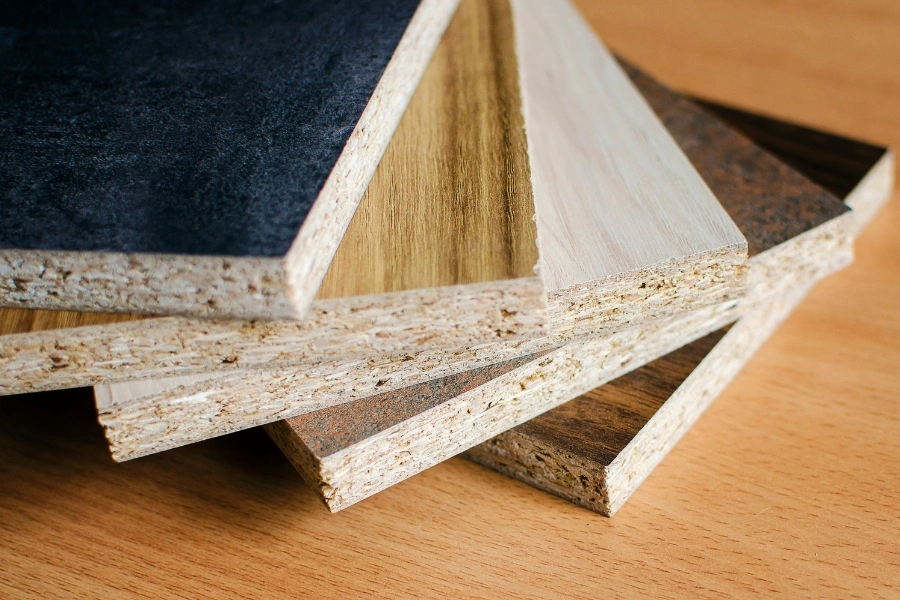
Modern furniture is synonymous with minimalist design, smooth surfaces, and precise shapes. Behind its attractive appearance, the choice of materials is one of the key factors that determine quality, durability, and production costs. One of the most popular materials in the furniture industry is MDF material.
MDF is widely used for various interior needs, ranging from cabinets, kitchen sets, shelves, and desks to decorative panels. Its relatively affordable price and neat appearance make it the choice of many manufacturers and homeowners alike.
However, is MDF truly suitable for all types of furniture? Before choosing it, let’s explore its advantages and disadvantages so you can find the material that truly meets your needs!
What Is MDF Material?
MDF, or Medium Density Fiberboard, is an engineered board made from a mixture of fine wood fibers, resin, and wax, which is then compressed under high pressure and temperature.
Unlike plywood, which consists of multiple layers of wood veneer, MDF has a homogeneous structure without natural wood fibers. This characteristic gives it a very smooth surface, making it easy to paint or cover with laminates such as HPL, PVC, melamine, or wood veneer. Because of its uniform texture, MDF is also easier to cut using CNC machines, making it ideal for modern furniture designs that require precise details.
The Advantages of MDF for Modern Furniture
There are many advantages to MDF that make it a favorite choice in the modern furniture industry. What are they?
1. Extremely Smooth Surface
Why is MDF so widely chosen? It’s because its surface is flat and smooth. This allows for a superior finish without the need for extensive sanding. This makes MDF ideal for furniture with duco finishes, solid paint, or premium laminates.
2. Easily Shaped into Various Designs
MDF has uniform density, making it easy to cut, drill, or shape into decorative profiles. This material is widely used for:
- Kitchen sets
- Closets
- Display shelves
- Decorative wall panels
- Desks
- TV cabinets
The working process is also more stable than with solid wood, which sometimes has knots or irregular grain patterns.
3. More Cost-Effective
Compared to solid wood, MDF offers lower production costs. For interior projects with limited budgets, MDF is an alternative that can produce an elegant look without incurring excessive costs.
4. Resistant to Warping
Because it lacks a natural wood grain direction, MDF is relatively stable against deformation caused by fiber shrinkage. As long as it is used in areas with appropriate humidity levels, this material can retain its shape over the long term.
5. Suitable for Modern Finishes
Furniture in styles ranging from Scandinavian and Japandi to modern minimalist generally prioritizes clean and neat surfaces. MDF material is the ideal choice because it produces a more consistent finish than many other materials.
6. More Efficient for Duco Finishing
MDF has a smooth, homogeneous surface without wood grain, making it ideal for the duco finishing process. With the right primer and application techniques, the paint finish becomes smoother, more consistent, and requires minimal touch-ups—especially on large surfaces like panels, cabinets, and wardrobes. This helps workshops improve production efficiency without compromising quality.
7. Easier CNC Cutting Precision
MDF’s uniform structure, free of wood knots, makes the CNC process more stable and precise. Cutting, routing, and even decorative details can be performed with high accuracy, making it ideal for complex designs such as grooved panels, custom shelving, and detailed furniture components. Precise results also speed up the assembly process and reduce the need for manual adjustments.
8. Material Consistency Supports Mass Production
MDF has uniform characteristics, resulting in more consistent workmanship compared to solid wood. This is crucial for mass production because dimensions, patterns, and finishes can be standardized. However, workshops still need to maintain MDF specifications (thickness, density, and supplier quality) to ensure consistent results across batches.
MDF Drawbacks to Consider
Although it has many advantages, MDF also has several limitations that you should understand before using it. What are they?
1. Poor Water Resistance
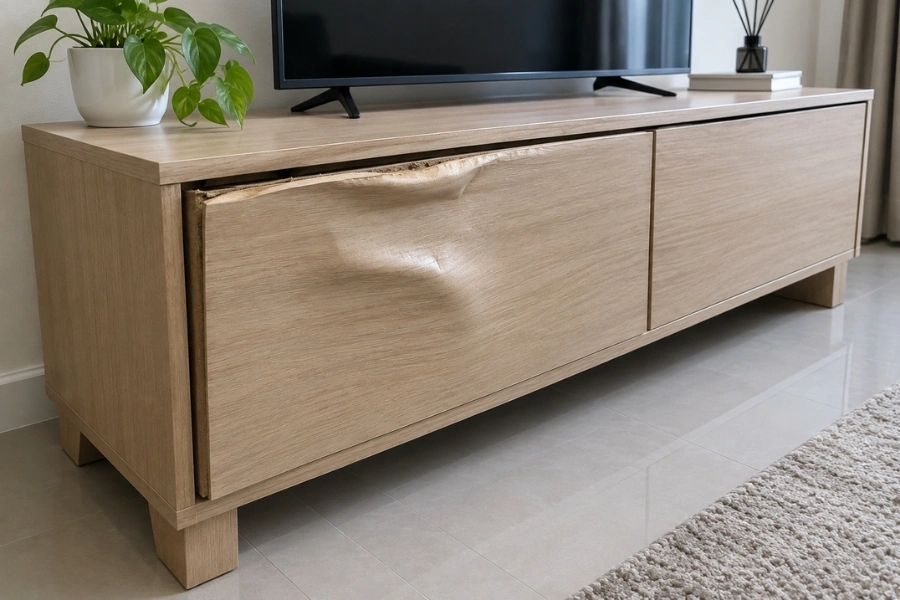
MDF’s biggest weakness is its sensitivity to moisture. If exposed to water for an extended period, the board can absorb liquid, causing it to swell and lose strength. Therefore, MDF is not recommended for areas frequently exposed to direct water contact. For areas with higher humidity levels, you may want to consider HMR (High Moisture Resistant), which is designed to offer better resistance to moisture.
2. Low Screw Holding Power
Compared to plywood, MDF tends to have lower screw-holding strength. If installation techniques are improper or the panels are frequently disassembled and reassembled, the joints may become loose.
3. Relatively Heavy
Although it is not solid wood, MDF has a fairly high density, making it heavier than particle board. You need to take this into account, especially for wall-mounted furniture such as wall cabinets.
4. Not Suitable for Very Heavy Loads
For shelves used to store heavy items over a long period of time, MDF material may sag if the thickness or support system is insufficient.
Read also: Types of Plywood and Their Uses in Home Interiors
Tips for Choosing MDF Furniture
To ensure your furniture investment lasts longer, keep the following points in mind!
- Choose MDF with good density and a smooth surface.
- Ensure the finish uses high-quality HPL, PVC, veneer, or paint for optimal moisture protection.
- Avoid prolonged direct exposure to water.
- Use high-quality accessories and hardware for stronger joints.
- Adapt the use of MDF to the furniture’s function and the room’s conditions.
Thus, MDF material offers many advantages for modern furniture, ranging from a smooth surface and ease of shaping to more economical costs. However, this material also has limitations, particularly regarding moisture and heavy loads. By understanding its characteristics, you can determine whether MDF is the right choice or if it should be combined with other materials to ensure your furniture project is more durable and meets your needs.
Remember, the quality of the materials also affects the quality of the furniture. Well, when it comes to high-quality MDF that has been proven reliable for furniture and interior design needs, Hojaya has the solution! We provide MDF panels that meet strict quality standards, featuring a smooth surface and available in a variety of thicknesses. Additionally, our MDF is easy to finish with various types of coatings, such as HPL, veneer, or paint.
Don’t worry, we also offer fast shipping and are ready to meet your material needs for home renovation projects, workshops, and even large-scale commercial projects.
Contact us today for a consultation and discover the best material solutions tailored to your furniture and interior design needs!
FAQ
1. What is the function of MDF in furniture?
It can be used as the primary material for making various types of furniture, such as wardrobes, kitchen sets, tables, shelves, TV cabinets, and even decorative panels, because it has a smooth surface that is easy to finish.
2. Is MDF water-resistant?
MDF is not resistant to prolonged exposure to water. However, there is a type of moisture-resistant MDF that offers better resistance to moisture.
3. Which is stronger, MDF or plywood?
Plywood is generally stronger in terms of structure and moisture resistance. Meanwhile, MDF is superior for producing a smooth surface and a neat finish.
4. What is the lifespan of MDF furniture?
MDF furniture can last more than 10 years if made with high-quality materials, a good finish, and placed in a non-humid area.
5. Is MDF suitable for kitchen cabinets?
Yes, MDF is suitable for kitchen cabinets, especially in areas not directly exposed to water. To ensure longevity, use high-quality finishes such as HPL or PVC and make sure the installation is done correctly.