


Blog
Why Might Wood Dimensions Differ from the Order? Here’s What You Need to Know

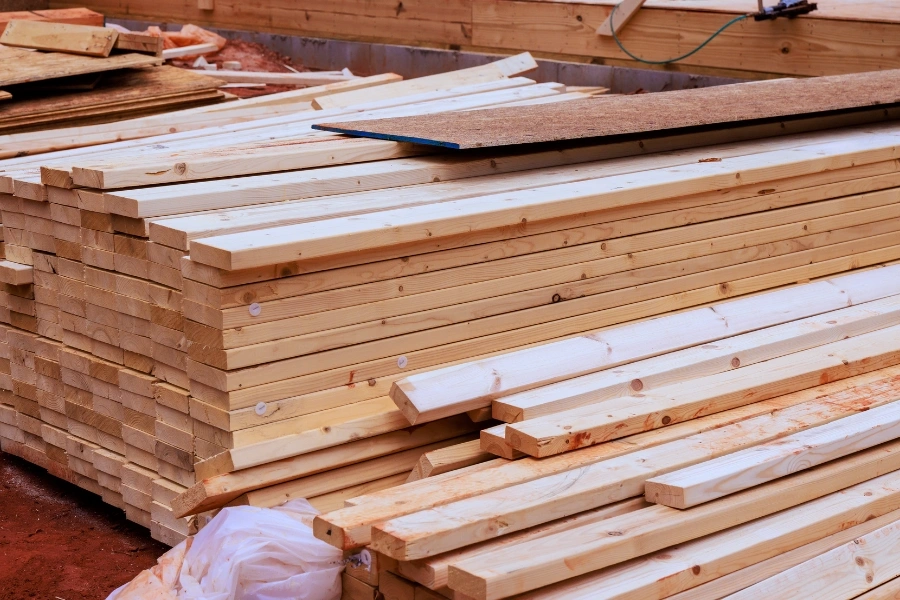
Ordering large quantities of wood for a project requires precision. However, have you ever encountered a situation where the delivered wood dimensions appeared slightly different from the figures listed in the order? Don’t be too quick to assume the wrong material was shipped. With solid wood, dimensional variations occur due to the material’s natural characteristics, changes in moisture content, and processes such as sawing and planing.
The issue is that a discrepancy of a few millimeters while seemingly trivial for some tasks—can be significant when dealing with furniture, door/window frames, construction joints, or work requiring strict adherence to technical drawings. So, why exactly does this happen?
Why Might Wood Dimensions Differ from the Order?
Wood dimensions can differ from the ordered figures due to the distinction between nominal and actual sizes, shrinkage caused by moisture content changes, and the material undergoing cutting or planing processes.
In the timber trade, the figures cited during ordering do not necessarily represent the material’s final dimensions. Therefore, you need to clarify from the start whether the supplier’s specifications refer to the raw stock size, nominal size, or finished size.
This becomes increasingly important when purchasing wood in bulk. A misunderstanding regarding the specifications of a single piece might seem minor, but if it affects hundreds of pieces, the impact on material requirements and on-site work can be substantial.
What Is the Difference Between Nominal and Actual Size?
Nominal size is the dimension used to designate or classify the material, whereas actual size refers to the physical dimensions that can be measured after the wood has undergone production processes.
A simple example wood might be marketed using specific dimensional designations, but after passing through drying and planing processes, its actual dimensions may change.
| Aspect | Nominal Size | Actual Size |
|---|---|---|
| Material condition | Refers to the dimensions before a particular process | After the production process |
| Effect of drying | Not necessarily taken into account | Already affected by changes in moisture content |
| Effect of planing | Not necessarily taken into account | Material lost due to planing is taken into account |
| Uses | Identification and ordering | Installation and precision work |
So, before buying, don’t just ask, “What is the size?” It is safer to ask, “Is that the nominal size or the actual size after planing?”
Read also: Checklist Before Buying Construction Timber to Avoid Losses
Must All Timber Have 100% Identical Dimensions?
Not necessarily. Timber is subject to production tolerances and natural variations, so the dimensions of each piece are not always identical down to the smallest measurement. Tolerances can arise from cutting, sawing, drying, and planing processes, as well as the natural characteristics of the log.
For projects requiring high precision, tolerances are a crucial part of purchasing specifications. Do not simply list the timber type and dimensions; also consider:
- dimensional tolerances ranging from 0.3 cm to 1 cm, depending on the timber type and quality,
- material length,
- moisture content (if required),
- grade or quality,
- surface condition,
- straightness,
- and finishing requirements.
The more detailed the purchasing specifications, the less room there is for differing perceptions between the buyer and the supplier.
How Can You Ensure the Timber Matches the Order?
The safest approach is to agree on specifications in writing and clarify from the start whether the dimensions refer to nominal or actual sizes. For project purchases, follow these steps:
1. Determine Final Dimensions
Clarify whether the timber will be used in its raw state or processed further in a workshop. If the material is to be planed, do not equate the initial raw dimensions with the required final dimensions.
2. Include Specifications in the Purchase Order
Do not just list the material type and quantity. Include details such as the product name, size, dimensions, grade, surface condition, tolerances, required quantity, delivery address, and recipient’s name.
3. Request Samples or Photos of the Material
For bulk purchases, samples help you understand the material’s characteristics before the large order is shipped.
4. Inspect Upon Delivery
Use appropriate measuring tools and inspect several pieces, not just one. Check the dimensions, straightness, surface condition, and whether the material type matches the order documentation. Distinguishing Between Dimensional Issues and Specification Issues
Material with slightly different dimensions does not necessarily mean it fails to meet specifications. Conversely, if the wood type, grade, length, or material condition does not match the agreed terms, that constitutes a different issue that needs to be communicated to the supplier.
Therefore, a difference in wood dimensions does not always mean the delivered material is incorrect or does not match the order. Factors such as nominal versus actual dimensions, drying processes, planing, and production tolerances can cause slight variations in wood dimensions. For this reason, ensure that you and the supplier agree on the specific dimensions from the outset—including actual size, length, tolerances, grade, and material condition.
You can find the perfect timber solutions in various types and sizes for construction, furniture, and other projects at Hojaya! We offer meranti Kalimantan, kamper Samarinda, bengkirai, kruing, and much more. Choose from beams, planks, battens, and rafters tailored to your project’s specific needs.
No need to worry about shipping; we deliver nationwide with an estimated delivery time of just 1–2 days. Plus, enjoy free shipping on orders of Rp5 million or more.
Finally, before placing a bulk order, don’t just verify the wood type and quantity. Ensure the agreed-upon dimensions are clearly defined so the materials you receive perfectly match your project requirements. Contact us today!
FAQ
1.Why might the wood dimensions differ from the order?
Discrepancies arise from the difference between nominal and actual sizes, shrinkage due to moisture content changes, and the cutting and planing processes.
2. Does dried wood always shrink?
Wood undergoes dimensional changes as its moisture content decreases. The extent of this change depends on the wood species, grain direction, initial condition, and the drying process.
3. What is meant by “nominal size” for wood?
Nominal size refers to the reference size or designation of the material; it does not necessarily represent the final physical dimensions measured after production.
4. How can I order wood to avoid size errors?
Clarify from the start whether the ordered dimensions are nominal or actual. Also, specify the wood type, length, grade, quantity, surface condition, and tolerances in your purchase specifications.
5. Is a difference of a few millimeters in the wood a problem?
It depends on the application. While it may not matter much for rough construction work, dimensional discrepancies will affect the final outcome in furniture making, door/window frames, joinery, and precision work.