



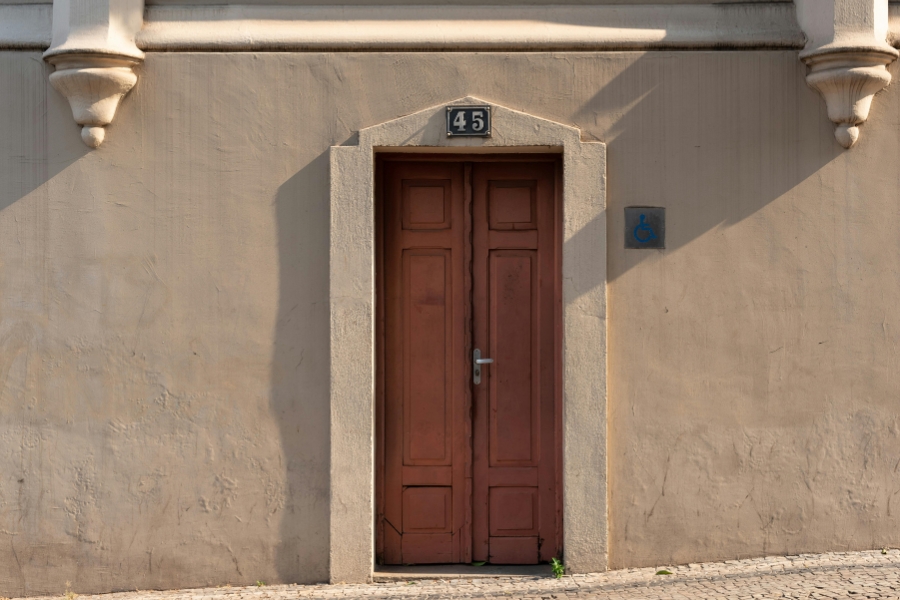
Wooden door that were originally straight and fit perfectly suddenly become warped and difficult to close? This condition can certainly be confusing and frustrating, especially if the doors are still relatively new. Problems like this not only interfere with the function of the door, but can also reduce the aesthetic value of the room.
Well, changes in the shape of wooden doors do not occur without cause. There are several important factors that are often overlooked, ranging from environmental conditions to material quality. Therefore, before the damage gets worse, let’s first identify the causes of warping in wooden doors so that it can be prevented from the start!
Causes of Warped Wooden Door
Warping in wooden doors does not usually occur suddenly. There are certain processes and factors that affect the shape of wood over time. To understand the root of the problem, let’s discuss them one by one!
1. Unstable Air Humidity
Wood is an organic material that is highly sensitive to humidity. When the air is too humid, the wood fibers absorb water vapor and expand. Conversely, when the air is too dry, the wood shrinks. This cycle of expansion and contraction often occurs during the rainy season or when air conditioners/fans are turned on too often. As a result, doors can warp due to uneven changes in the dimensions of the wood fibers.
2. Errors in the Wood Drying Process
Wood used to make doors should have undergone a proper drying (seasoning) process to stabilize its moisture content. Wood with high moisture content will continue to undergo natural changes after being installed as a door, eventually causing deformations such as warping or denting. An improper drying process is often the root cause of this problem.
3. Imprecise Installation
Every wooden door has a size tolerance. If the door frame or hinges are installed imprecisely, uneven pressure can cause the door to warp over time. For example, a frame that is too narrow on one side, or the use of low-quality hinges. This triggers an unbalanced pressure, causing the wooden door to change to an undesirable shape.
4. Wood Type and Internal Structure
Not all woods have the same stability. Tropical woods such as teak can be more stable than other softwoods. Wood with straight grains tends to be less prone to warping than wood with twisted grains. In addition, doors made of solid wood without internal reinforcement techniques (e.g., engineered panels or honeycomb cores) are more prone to deformation due to environmental conditions.
5. Improper Storage and Maintenance
Before installation, wooden doors stored in humid areas without proper air circulation will absorb moisture twice as fast. Similarly, after installation, if the door surface is not protected with the right finish or paint, rainwater or water splashes can seep in, changing the structure of the wood over time.
How to Prevent Doors from Warping
If you want the wooden doors in your home to remain neat and functional:
- Ensure that the wood has undergone a proper drying process before being made into doors.
- Choose a type of wood that is stable for tropical climates.
- Use protective finishes such as paint, varnish, or waterproof coatings.
- Ensure installation is done by professionals to ensure precise frames and hinges.
Now you know why wooden doors can suddenly warp, right? Essentially, environmental factors such as humidity, wood quality, and installation process play a significant role in keeping doors stable and precise.
Ultimately, durable wooden doors that do not easily change shape always start with the right choice of materials. For custom door needs or home renovations, you can rely on Hojaya as a distributor of high-quality wood and plywood. Our products meet good construction standards and offer more stable wood options, helping to minimize the risk of deformation in the future.
In essence, with the right materials and proper installation, wooden doors not only look neater but are also more durable and safe for long-term use.