



Choosing plywood material for a project often seems trivial. However, you should know that this decision can greatly determine the final result of the project in terms of strength, appearance, and long-term durability. On the market, you will find two main options that are most often compared, namely local and imported plywood. Both are equally popular, but have different characteristics, qualities, and functions.
So, you want to use one of them? To avoid making the wrong choice and regretting it later, let’s first understand the characteristics of these two types of plywood so you can determine which one is most suitable for your project needs!
What is Plywood?
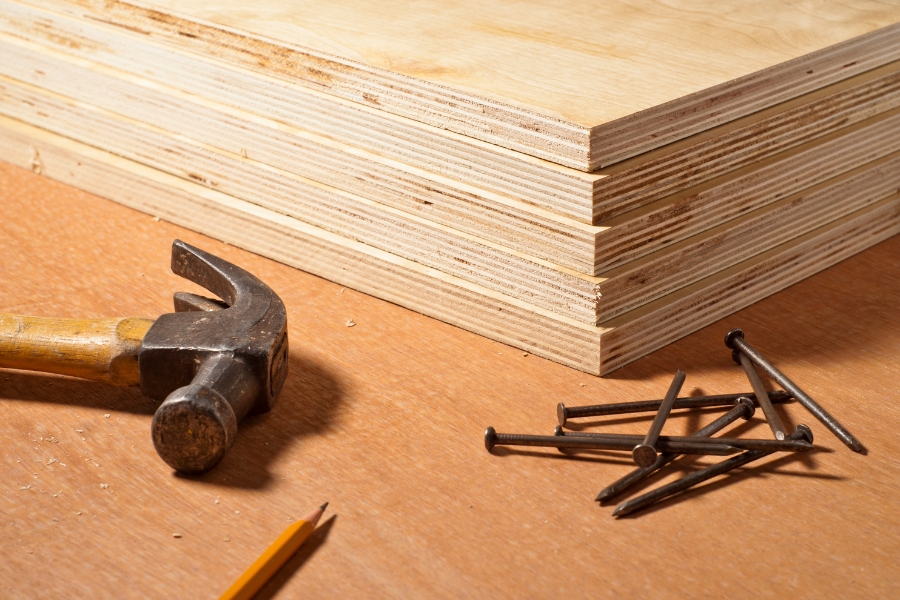
Plywood is a wood-based panel composed of several layers of veneer glued together crosswise, resulting in a material that is stronger and more stable than regular solid wood. This material is commonly used for furniture, interior construction, ceilings, floors, or light to medium structural elements. When choosing plywood, the quality of the layers, the type of wood, and the production standards will affect the final performance of the material in your project.
Characteristics of Local Plywood
Local plywood is widely used in various projects because it is easy to find and relatively affordable. Here are its basic characteristics.
1. Indonesian Wood Raw Materials
Local plywood often uses wood from Indonesia, such as sengon, meranti, or albasian, which are suited to the tropical climate here. These materials tend to be easier to obtain, making the price more competitive.
2. More Natural Texture and Aroma
Because the materials are local, the surface and aroma of plywood often feel more natural. You can see variations in wood grain that are more characteristic of Indonesia.
3. More Economical Price
Production and distribution costs that are not too high make local plywood products more affordable, suitable for large-scale projects with tight budgets.
4. Adhesive Standards Can Vary
Not all local plywood uses high adhesive standards such as WBP (Water Boiling Proof) which is water resistant. Therefore, make sure you choose the grade that suits your project needs.
Characteristics of Imported Plywood
Unlike local products, imported plywood generally comes with stricter production standards. This material is often chosen for projects that demand high quality, precision, and extra durability. What are its characteristics?
1. International Quality Standards
Imported plywood is generally produced according to global standards with more consistent glue and veneer quality. This makes the material more resistant to climate change and humidity.
2. Better Durability for Special Applications
Many imported plywoods have special ratings such as marine plywood or phenolic veneer that are resistant to water and termites, suitable for outdoor projects or humid areas.
3. Smoother Surface and High Dimensional Precision
Manufacturing processes using more advanced technology usually produce a smoother surface and more consistent thickness than some local products.
4. Prices are Usually Higher
Import costs, import duties, and global quality standards make imported plywood usually more expensive, but it is often comparable to its durability and performance in heavy applications.
Local vs. Imported Plywood: Which to Choose?
After understanding the characteristics of each, it’s time to decide between local and imported plywood. This decision should be based on:
1. Interior Projects & Limited Budget
If your project is interior or indoor with a need for budget efficiency, good-grade plywood from the local market can be a cost-effective choice without sacrificing quality, especially if the structural requirements are not extreme.
2. Exterior Projects or Waterproof Requirements
If you are working on a project that requires extra resistance to water, weather, or heavy loads, imported plywood with high-quality standards will be more suitable, even though the price is higher. Remember, be sure to choose the type that suits your project design needs.
Ultimately, understanding the characteristics of local and imported plywood is crucial to ensure your project is not only completed on time but also has long-lasting quality. Start by determining the area of use, the load it will bear, and, of course, the available budget. The key to selecting plywood is not just about price but also the quality of the material, the wood grain characteristics, adhesive standards, and the supplier’s reputation.
Well, for those of you who are looking for high-quality plywood with a truly complete selection, Hojaya is the place to go! At Hojaya, we offer various types of plywood, ranging from local to imported plywood with various thicknesses and specifications that can be tailored to your construction, furniture making, interior design, and home renovation needs.
Moreover, we have an experienced team ready to assist you in selecting the most suitable plywood type based on the function and conditions of your project. Material quality is guaranteed, stock is always available, and the ordering and delivery process is made easier.
What are you waiting for? Come visit Hojaya!