

Blog
Why Does MDF Furniture Easily Swell?

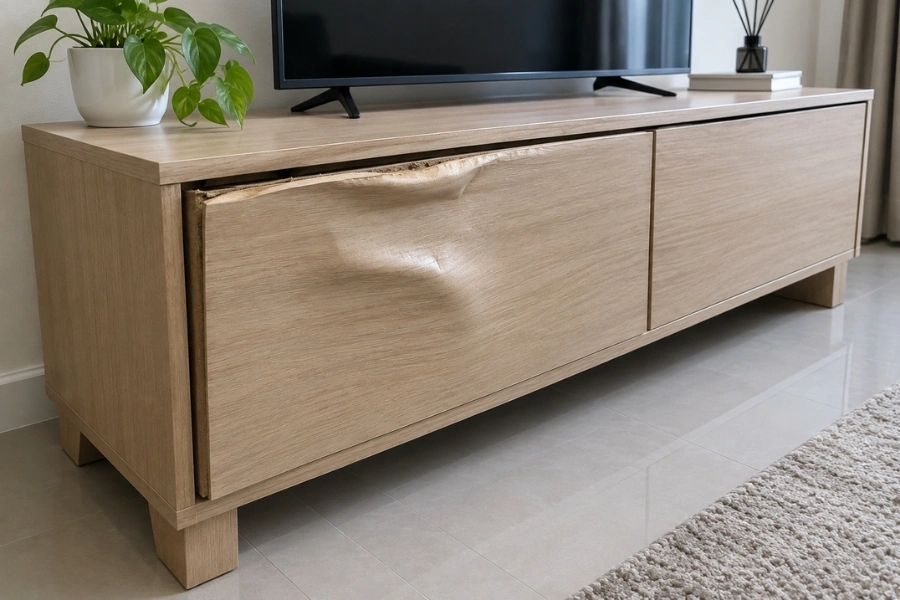
Furniture with a neat appearance and a smooth surface is certainly appealing, but have you ever encountered a table, cabinet, or wardrobe that suddenly developed a bulge in a specific area? A common culprit is exposure to moisture. This issue usually manifests as a raised surface, a lifting finish, or warped board edges.
Interestingly, MDF is not actually a poor material for furniture. In fact, it is widely used because of its uniform surface, ease of cutting, and suitability for various finishes. The issue lies more in how the material is used, protected, and positioned. So, why does MDF furniture swell?
What Is MDF? Why Does It Easily Absorb Moisture?
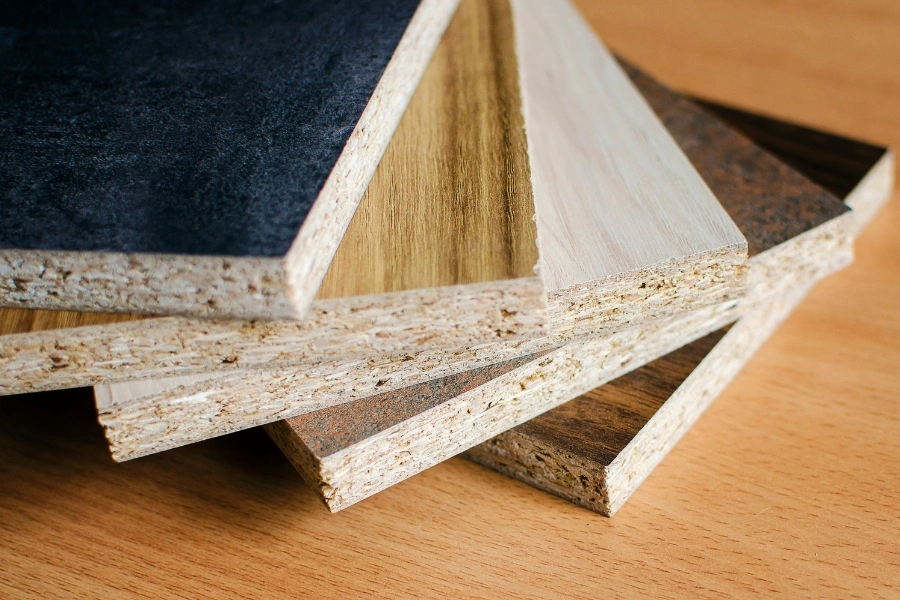
MDF (Medium-Density Fiberboard) is an engineered wood product made from processed wood fibers mixed with adhesive and then compressed under specific heat and pressure conditions. This structure gives MDF a relatively homogeneous surface with minimal coarse fibers. This is one reason why MDF is popular for interior applications such as decorative panels, cabinet doors, molding, and various furniture components.
However, that fiber structure becomes a critical factor when the board comes into contact with water. When moisture penetrates the board, the wood fibers absorb the water and expand. If significant or repeated absorption occurs, this dimensional change causes the board’s surface to appear swollen.
Studies comparing MDF with HMR (High Moisture Resistance) board have found that standard MDF exhibits higher water absorption and greater thickness changes after immersion testing. This indicates that a board’s ability to withstand moisture is heavily influenced by the material type and its manufacturing characteristics.
Why Does MDF Material Furniture Swell?
There are several mechanisms that cause MDF furniture to swell, it is not solely due to direct contact with water.
1. Water Penetration at the Board Edges
The edges are areas that require special attention. When the board is cut, the fiber structure along the cut edge becomes exposed, making it more susceptible to environmental interaction. Problems can arise when edge banding, paint, veneer, or protective coatings fail to seal an area effectively. Water from spills, cleaning, or ambient humidity can then seep in through tiny gaps. Consequently, furniture that appears sound on the surface may not actually be fully protected if the edges lack a proper finish.
2. Prolonged High Humidity
Standing water isn’t the only cause of MDF issues; high-humidity environments also play a role, especially if the furniture is located in a poorly ventilated area.
Areas such as kitchens, spaces near sinks, rooms frequently exposed to steam, or spaces with poor air circulation require extra attention.
Gradual moisture ingress leads to incremental dimensional changes. This explains why furniture might appear perfectly fine for months before suddenly showing signs of alteration at the base or in specific corners.
3. Incomplete Surface Finishing
Finishing is not merely an aesthetic choice; the finish layer also acts as a barrier against environmental factors. If only the front surface is coated while the back, drill holes, joints, or edges remain exposed, moisture still has a pathway to enter.
The risk increases significantly when furniture features numerous joints and cut edges. Each of these points requires proper treatment to ensure consistent protection for the board.
4. Choosing the Wrong Board for the Application Area
This is a frequently overlooked factor. Not all board types are suitable for every condition. While standard MDF material is an excellent choice for interior furniture in dry areas, using it in high-humidity environments requires a different approach.
If furniture is to be placed near a water source, material selection should be based on environmental conditions rather than just price or surface appearance.
5. Furniture in Direct Contact with the Floor
The bases of cabinets or wardrobes are also common trouble spots. Water from mopping, minor leaks, condensation, or a damp floor can cause the bottom of the furniture to slowly absorb moisture. Due to its hidden location, damage often goes unnoticed until the board begins to swell and the finish starts to deteriorate.
To address this, solutions include specific furniture leg designs, elevating the base, and ensuring that no part of the board comes into direct contact with damp surfaces.
How Can You Prevent MDF Furniture from Swelling?
Prevention can actually begin at the material selection and design stages.
- First, match the MDF material to its intended location. Furniture for a bedroom has different requirements than a cabinet placed under a sink.
- Second, protect the edges. Do not overlook the edges as unimportant areas; ensure all exposed sides are properly protected according to the finishing system used.
- Third, clean up water spills immediately. Do not allow water to sit on or around the furniture for extended periods.
- Fourth, pay attention to the base of the furniture. Use legs or a construction design that prevents the board from coming into direct contact with the floor, where moisture might accumulate.
- Fifth, do not rely solely on the finish. While paint, HPL, veneer, or laminate coatings help, the choice of board and the construction method remain the primary foundation.
So, furniture swelling does not mean MDF is a poor material choice. Problems usually arise when the board is exposed to moisture levels incompatible with its characteristics especially if edges, joints, or cut areas are not well-protected.
Therefore, before building furniture, do not simply ask, “What is the cheapest material?” Instead, consider where the furniture will be used and the environmental conditions it will face.
If you need MDF for furniture or interior projects, Hojaya is the place to go! We offer MDF boards in thicknesses ranging from 3 mm to 18 mm. Our products are suitable for various applications, including wall panels, decorative moldings, and speaker enclosures.
In short, MDF can be an excellent choice provided it is used correctly and moisture protection is prioritized from the start. To find the right material for your project, contact us for recommendations tailored to your specific furniture application!
FAQ
1.Does MDF swell easily when exposed to water?
Yes. Standard MDF can absorb water and expand, especially when exposed to large amounts of water or prolonged moisture.
2. Which part of MDF is most vulnerable to water?
Edges, cut surfaces, drill holes, joints, and areas where the finish is not properly sealed are typically the points requiring special attention.
3. Is MDF suitable for kitchen cabinetry?
MDF can be used for certain kitchen cabinetry applications, particularly in areas that are relatively protected. However, for areas exposed to a high risk of water contact, careful consideration must be given to the choice of board type and the protective system used.
4. Can laminated MDF still swell?
Yes, it can. While lamination helps protect the surface, water can still penetrate through edges, joints, holes, or any damage to the protective layer.
5. How do you choose MDF for furniture?
Consider the intended location, humidity levels, board thickness, type of finish, edge protection, and the load the furniture will bear. Do not base your choice solely on price, as the conditions of use are the primary factors determining the material’s lifespan.