



Blog
Plywood Thickness and Types for Kitchen Sets, Which One Is Right?

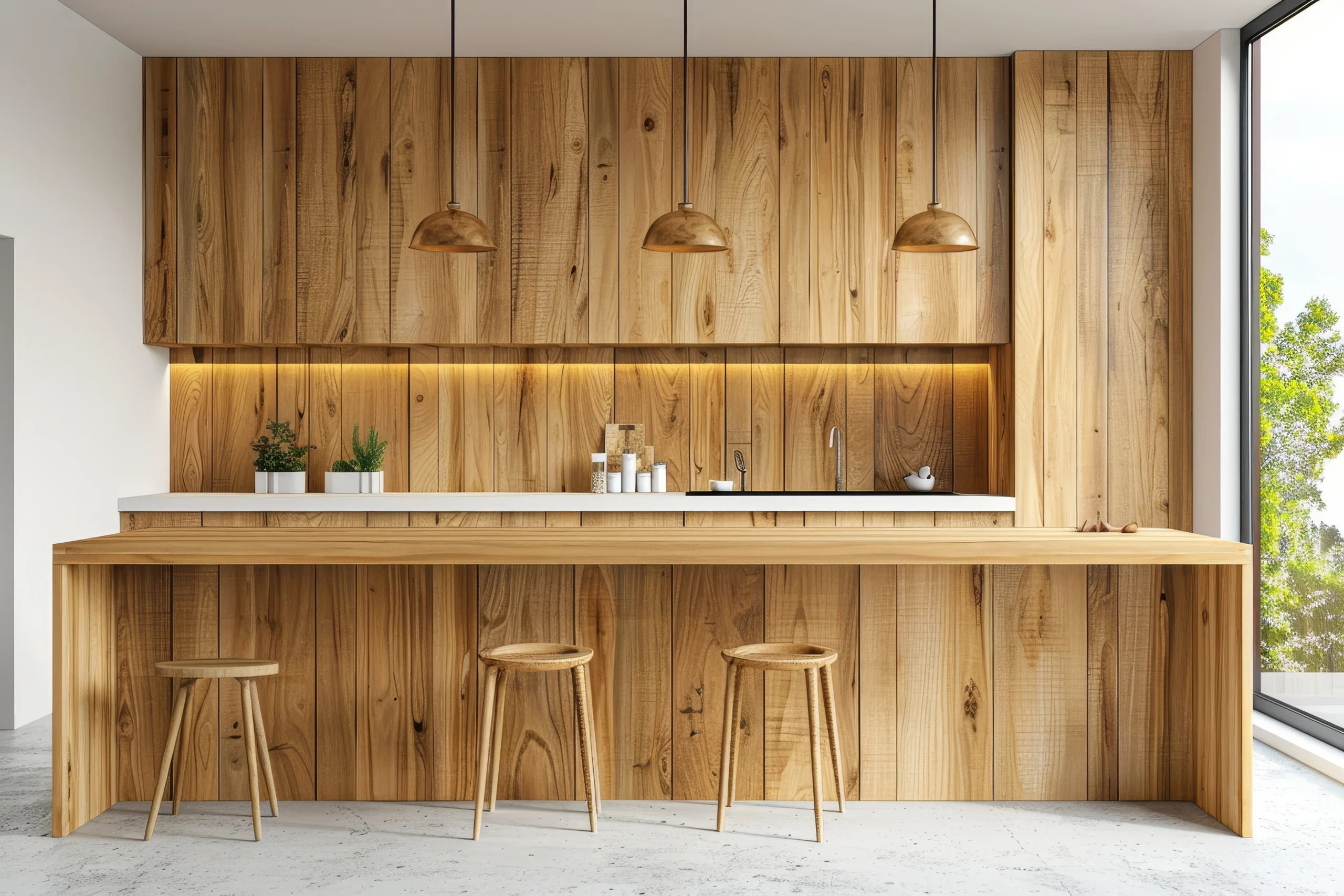
A kitchen set is not just about design and finishing colors. The materials used for the cabinets, doors, and shelves also determine whether the furniture will last for years or quickly sag, swell, and deteriorate. Therefore, choosing plywood for kitchen sets should not be based on price alone, but should also take into account thickness, core type, kitchen conditions, and the finishing to be used.
On the market, plywood is available in various thicknesses and characteristics. Some options are suitable for cabinet structures, while others are better suited for decorative panels. So, what thickness is ideal, and what type of plywood makes the most sense for kitchen sets?
What Plywood Thickness Is Best for Kitchen Sets?
For kitchen set cabinets, a thickness of 15–18 mm is generally a safe choice because it offers a balance of strength, stability, and weight. An 18 mm board is particularly suitable for parts that carry heavier loads, such as cabinet sides, long shelves, or sections that support kitchen appliances.
Meanwhile, 12 mm plywood can still be used for certain components with lighter loads. However, its use should be adjusted to the span and construction system. The longer a shelf is without support, the greater the risk of sagging.
On the other hand, plywood for kitchen sets that is too thin may be lighter and more economical, but it is not necessarily efficient for the main structure. So, do not just ask, “How many millimeters?” Consider which part of the kitchen set will be made and the load it will need to support.
What Types of Plywood Are Suitable?
The type of board also affects the final result. For interior applications, some relevant options include standard plywood, melamine-faced plywood, HMR and blockboard.
Melamine-faced plywood is a popular choice for kitchen units as its surface already has a decorative finish that is relatively easy to clean and looks neat. Multi Melamine and HMCP are available as melamine-faced plywood options for interior and furniture applications.
For areas prone to damp, HMR (High Moisture Resistance) may be worth considering. This material is designed to be more resistant to damp conditions than standard interior boards. The plywood range includes HMR and HMR Melamine.
Meanwhile, blockboard has a different core construction and is often considered for furniture due to its stability in certain applications. Blockboard and Melamine Blockboard are available for furniture and interior applications.
Melamine blockboard for furniture and interior design.
It is important to note that plywood should not be confused with all types of engineered wood. MDF, HMR, blockboard and plywood each have different structures and characteristics. The best choice depends on the component’s function, the finish, humidity levels and the project budget.
Which Kitchen Set Components Need Thicker Boards?
Not every part needs to use the same thickness. Base cabinets, for example, need to account for the weight of countertops, kitchen appliances, dishes, and various items stored inside. For parts like these, 15–18 mm makes more sense than using boards that are too thin.
For wall cabinets, the load is usually lighter. However, the thickness still needs to be adjusted according to the cabinet size and shelf length. Long shelves without additional support are more likely to sag even when made from sufficiently strong materials.
Then there are cabinet doors. These components need not only strength but also dimensional stability because they will be opened and closed frequently. Material and finishing choices should also take weight into account so the hinges are not subjected to excessive loads.
Quality Plywood Options from Hojaya!
Choosing plywood for kitchen units is easier when there are several options available in one place. Hojaya offers a wide range of plywood products, from Albasiah Palem, BBCC Export, Multi Melamine, Blockboard, MDF and HMR to HMCP.
This means that every requirement does not have to be met with a single type of board. You can select materials based on the furniture component, humidity level, finishing requirements, and cost target. We also provide plywood in a wide range of thicknesses and serve both project and workshop needs.
Ultimately, choosing plywood for kitchen sets is not about finding the thickest or most expensive material. What matters more is matching the type and thickness to the function of each kitchen set component.
If you are preparing a kitchen set project and are still unsure about which material to choose, our plywood options can be one of the alternatives to compare based on your project requirements. So, do not choose the wrong material simply to pursue a lower price, select a board that truly suits the load, kitchen conditions, and design you want to achieve.
FAQ
- What plywood thickness is suitable for kitchen sets?
A thickness of 15–18 mm is generally a suitable choice for main structural components because it is strong enough for various cabinet requirements. However, the ideal thickness still depends on the design and load.
- Can 12 mm plywood be used for kitchen sets?
Yes, for certain components with light loads and short spans. For cabinets or shelves that carry heavier loads, a thickness of 15–18 mm is usually safer.
- Which is better for kitchen sets: plywood or MDF?
Both have different characteristics. Plywood has a layered veneer construction, while MDF is made from wood fibers. The choice should be adjusted to strength requirements, humidity conditions, finishing needs, and budget.
- Is HMR suitable for kitchen sets?
HMR can be considered for interior areas exposed to higher humidity because it offers better moisture resistance than standard interior boards.
- Where can I buy plywood for kitchen set needs?
Choose a distributor that offers several types and thicknesses so the material can be tailored to your project requirements.