


Blog
Don’t Get It Wrong for Different Areas! Comparing WBP vs MR Plywood

Choosing plywood isn’t just about thickness or price. Where it will be used matters too. Each type has different resistance to moisture and water. That’s why understanding WBP vs MR plywood can help you pick the right material. It also helps you avoid damage like swelling or delamination.
WBP and MR both use veneer layers, but their adhesive type and resistance differ. So which one suits your project’s location better? Let’s find out.
What’s the Difference Between WBP and MR Plywood?
The most basic difference lies in the adhesive type and how well it handles water exposure.
MR (Moisture Resistant) is designed to handle moisture under normal usage conditions. Many MR products use a Urea Formaldehyde (UF) based adhesive. This material suits interior use and relatively dry areas. MR doesn’t mean waterproof. Continuous water exposure can still damage the bond between layers.
WBP (Weather and Boil Proof), meanwhile, refers to how well the adhesive bond holds up under harsher wet conditions. WBP typically uses Phenol Formaldehyde (PF) resin. It’s meant for applications that need higher resistance to moisture and water exposure.
So don’t think of WBP as simply a better version of MR. It’s more accurate to look at the material’s working environment.
This comparison shows that choosing between WBP vs MR plywood should be based on your project’s needs. It shouldn’t just be about chasing the highest spec available.
What Areas Suit MR Plywood?
MR makes sense when plywood will be used in an environment where moisture can be controlled. Examples include cabinets, living room furniture, interior panels, partitions, and interior ceilings. It also suits furniture parts that don’t come into direct contact with water. In these cases, using WBP can be less efficient. Its water resistance advantage simply isn’t needed.
Still, pay attention to the exact location of use. A kitchen set, for example, has different zones. Upper cabinets far from water sources can use different material than cabinets under the sink, which risk seepage.
When Should You Choose WBP?
WBP is more suitable when water, rain, or high humidity is part of the material’s working conditions. Examples include concrete formwork, outdoor applications, and floors or panels exposed to water. It also fits construction projects needing higher resistance to wet conditions. For film-faced plywood, WBP is also often chosen when panels will go through repeated formwork cycles.
One important note: WBP indicates the adhesive bond class on the plywood. It’s not a guarantee that the entire panel is immune to every condition. Veneer quality, panel construction, and surface coating still affect lifespan. So do production quality, storage, and edge protection.
How Do You Tell WBP and MR Plywood Apart?
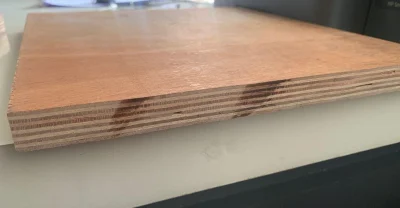
Visually, the sheet’s surface alone often isn’t enough to tell them apart. One common way to distinguish WBP vs MR plywood is by checking the glue line on the cut edge.
In some products, WBP’s phenolic-based glue line tends to look darker. MR’s UF-based adhesive can appear lighter by comparison. However, color isn’t the safest verification method, since formulations and products can vary. For large project purchases, it’s better to request product specifications or glue bond confirmation from the supplier.
Plywood Options from Hojaya for Every Need!
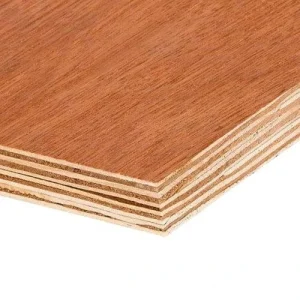
Still unsure which material fits your area of use? Hojaya offers Phenolic Lem WBP for applications needing higher resistance to weather and water. We also carry Phenolic Lem MR, which better suits areas with controlled humidity. Both are available for formwork and construction needs.
We also offer other plywood options such as MC Uty, BBCC Export, Blockboard, MDF, HMR, and melamine-coated plywood. You can match the choice to your construction, furniture, or interior needs.
So choosing between WBP vs MR plywood doesn’t have to be complicated. Just match it to the area of use and its exposure to water. Whatever your need, Hojaya is ready to help you find the right plywood for your project. Get in touch with us today.
FAQ
- Is WBP better than MR plywood?
Not always. WBP performs better in conditions needing high water and humidity resistance. MR is already sufficient for many dry interior applications.
- Can MR plywood be used for formwork?
Yes, in certain conditions, especially in relatively sheltered areas with suitable usage needs. For heavier water and weather exposure, WBP is the better fit.
- Can WBP plywood be used for furniture?
Yes. But for interior furniture kept in consistently dry areas, WBP may not offer benefits that justify the extra cost.
- How do you choose plywood for areas frequently exposed to water?
Prioritize plywood with a glue bond built for wet conditions, such as WBP. Also check veneer quality, thickness, panel construction, finish, and edge protection.
- Where can I get plywood for project needs?
Hojaya offers various types of plywood for construction, furniture, and interior needs, including materials built to resist moisture.