



Blog
7 Types of Bamboo Materials Commonly Used in Construction

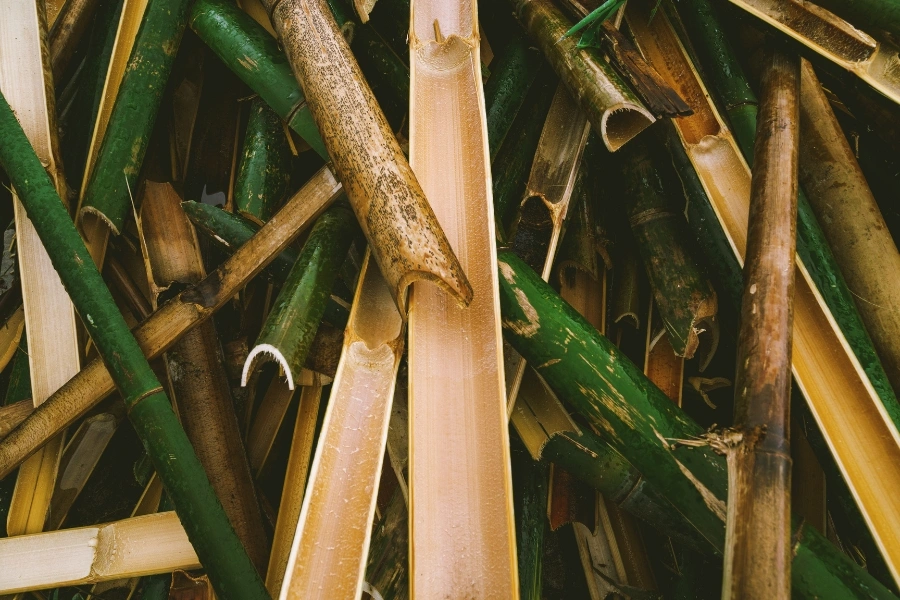
Bamboo materials has long been known as a natural construction material that is strong, flexible, and environmentally friendly. In fact, in many regions of Indonesia, bamboo remains the top choice for building homes, gazebos, small bridges, and even commercial buildings with a natural aesthetic.
Interestingly, not all bamboo shares the same characteristics. Some types are suitable for structural applications due to their thick, strong stems, while others are better suited for decorative elements or furniture. Therefore, understanding the different types of bamboo before using them is crucial to ensuring a sturdy and durable structure.
So, what are the most commonly used types of bamboo in construction? Let’s find out!
7 Types of Bamboo Materials
There are many types of bamboo, and each has distinct characteristics—ranging from stem size and wall thickness to load-bearing capacity. Here, we’ll break down each type one by one!
1. Petung Bamboo
Petung bamboo (Dendrocalamus asper) is one of the most popular species used in construction. Its characteristics include:
- A large stem diameter, which can reach 20 cm.
- Thick stem walls.
- Dense and strong fibers.
- Resistance to heavy loads.
Due to its high strength, Petung bamboo is often used for house posts, roof trusses, bridge structures, and even multi-story bamboo-based buildings. In modern construction, Petung bamboo is among the most widely chosen materials because it offers an excellent strength-to-weight ratio.
2. Apus Bamboo
Apus bamboo (Gigantochloa apus) is known for having a slimmer stem compared to Petung bamboo. What are its advantages?
- Flexible and easy to shape.
- Long, strong fibers.
- Suitable for weaving and lightweight structures.
This type of bamboo is often used for ceiling frames, bamboo walls, fences, and traditional building crafts. Due to its high flexibility, Apus bamboo is a favorite choice in tropical architectural design.
3. Wulung Bamboo
Wulung bamboo is easily recognizable by the color of its stems, which tend to be purplish-black. In addition to its unique appearance, this bamboo has several advantages, including:
- High aesthetic value.
- A fairly strong structure.
- Suitable for decorative building elements.
Architects often use wulung bamboo for facades, room partitions, artistic fences, and even premium gazebos.
4. Andong Bamboo
Andong bamboo has large stems and grows relatively quickly. It has a large diameter, straight stems, and is readily available in Indonesia. For this reason, andong bamboo is often used for building scaffolding, temporary frames, and support structures in traditional construction projects.
5. Ori Bamboo
Ori bamboo is characterized by thorns on its stem nodes. Nevertheless, this bamboo is widely used because:
- It has good hardness.
- It is resistant to pressure.
- It is relatively affordable.
Ori bamboo is often used for fences, simple building frames, and various rural construction needs.
6. Tali Bamboo
Tali bamboo is actually closely related to apus bamboo. Its advantages include:
- Long, straight stems.
- Strong fibers.
- Flexibility for various applications.
This bamboo is widely used for traditional roofs, woven walls, and lightweight building structures. Tali bamboo materials is known for being easy to work with on-site.
7. Gombong Bamboo
Gombong bamboo has large stems and fairly thick walls. Its advantages include:
- High structural strength.
- Suitable for permanent construction.
- Resistant to pressure.
This type is often used as columns, bamboo beams, or primary structural elements in bamboo-based buildings.
Are All Types of Bamboo Suitable for Construction?
Each type of bamboo has different characteristics, so its use must be tailored to construction needs. For main structures, petung bamboo and gombong bamboo are more highly recommended because they have high load-bearing capacity. Meanwhile, apus bamboo, tali bamboo, and wulung bamboo are more commonly used for architectural, decorative, or lightweight structural elements.
In addition to the type, the preservation process also significantly determines the service life. Without preservation, bamboo is more susceptible to damage from termites, powderpost beetles, and exposure to moisture.
Why Is Bamboo Gaining Popularity in Construction?
The popularity of bamboo as a building material continues to rise for the following reasons:
- It grows much faster than hardwood.
- It has high tensile strength.
- It is lighter than steel and concrete.
- It is environmentally friendly and renewable.
- It offers an aesthetically pleasing, natural appearance.
In fact, various engineered products such as bamboo plywood are now being used for interiors, furniture, and even modern building elements due to their stability and attractive appearance.
Therefore, choosing the right bamboo material is crucial for creating a building that is sturdy, durable, and suited to your needs. Each type of bamboo has its own advantages, ranging from petung bamboo—known for its strength in main structures—to wulung bamboo, which offers high aesthetic value. By understanding the characteristics of each type, you can maximize bamboo’s functionality while achieving optimal construction results.
If you’re looking for high-quality bamboo for construction, interior design, or various other applications, Hojaya is the answer! We provide bamboo carefully selected to the highest quality standards, making it suitable for a wide range of project needs. We also offer construction lumber, plywood, polyfilm, fancy , and film-faced.
With extensive experience in the wood materials industry and a commitment to quality, we’re ready to help you find strong, durable materials that will support your project and ensure the best possible results. Come find the high-quality bamboo you need for your project at Hojaya!
FAQ
1. What type of bamboo is the strongest for construction?
Petung and Gombong bamboo are among the strongest types because they have large diameters and thick walls.
2. What is the ideal age of bamboo for construction?
Generally, 3–5-year-old bamboo is considered ideal because its fibers are mature and more resistant to damage.
3. Is bamboo resistant to termites?
Bamboo can be attacked by termites if it is not treated. Therefore, the treatment process is very important before use.
4. Can bamboo be used for modern buildings?
Yes. Today, many architects use bamboo for homes, resorts, restaurants, and even modern commercial buildings.
5. What are the advantages of bamboo over wood?
Bamboo grows faster, is more environmentally friendly, is lightweight, and offers excellent strength for a variety of construction needs.