



Blog
Gelam (Dolken) Wood for Piling? Here Are the Pros and Cons!

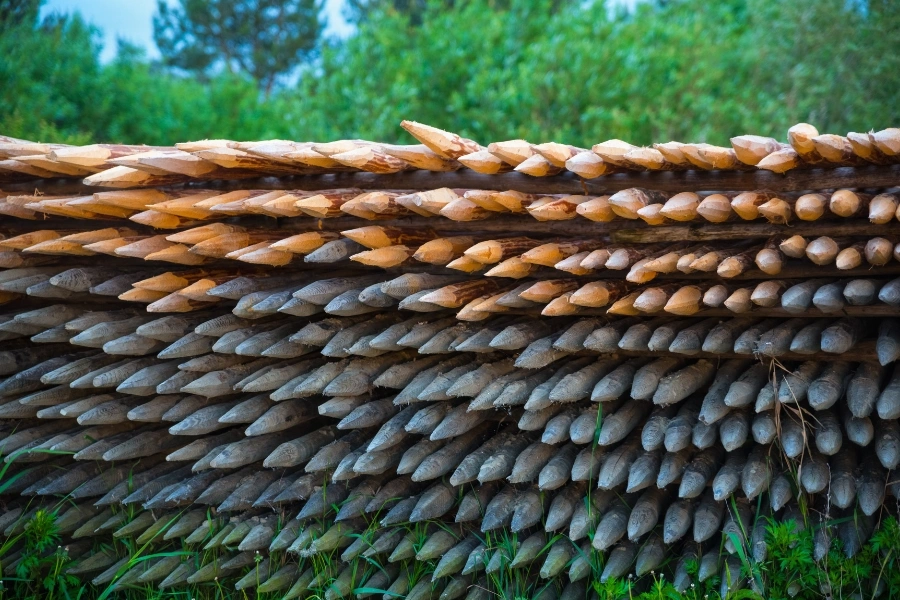
When a project is situated on soft soil, marshland, peat, or areas with low soil bearing capacity, the choice of piling material cannot simply be based on low cost or easy availability. Gelam wood (dolken) has long been used for piling specifically as friction piles or soil reinforcement particularly in wetland regions. Interestingly, research indicates that gelam wood embedded in peat swamp soil can remain intact for decades.
However, does this mean the material is suitable for every type of foundation? Not necessarily. Factors such as soil characteristics, log diameter, straightness, wood condition, and installation methods must be considered. So, before selecting it for your project, let’s take a closer look at its advantages and limitations!
Why Is Gelam Wood Often Used for Piling?
Gelam, or Melaleuca, is a type of wood traditionally utilized extensively in swampy areas. Its trunks tend to be straight and hard, making them well-suited for piling applications. Research on the use of gelam for foundations shows that commonly used diameters range from 6 to 15 cm, with 8–15 cm being the most frequent choice for foundation work.
There is an interesting aspect to its performance. In terms of classification, gelam falls into Strength Class II and Durability Class III. This means that, according to standard durability classifications, the wood is not automatically indefinitely resistant when in contact with soil. However, specific environmental conditions particularly oxygen-poor peat swamp soil can allow embedded gelam wood to last far longer than the classification ratings suggest.
Advantages of Gelam Wood for Piling
Gelam wood offers distinct advantages over other piling materials. Here are the benefits:
1. Suitable for Soft Soil and Marshland
Its most notable advantage is its suitability for use as piling in soft soil. Gelam wood embedded in peat swamps for periods ranging from 10 to 38 years has shown remarkably well-preserved characteristics. In fact, its specific gravity and hardness tend to increase the longer it remains embedded in such conditions.
2. Possesses Good Mechanical Strength
Gelam (paperbark) dolken logs are strong enough for specific construction needs. Studies on their quality as foundation piles indicate that the compressive strength parallel to the grain in some samples ranges from 208 to 244 kg/cm². However, these figures cannot be directly translated into the project’s foundation capacity, as the pile’s load-bearing capability depends on soil conditions, dimensions, depth, pile arrangement, and structural design.
3. Relatively Lightweight and Easy to Use
Compared to piling systems requiring specialized heavy machinery, wooden piles offer a practical choice for certain construction tasks. Logs with small diameters are also relatively easy to handle on-site, particularly for small- to medium-scale projects.
4. More Cost-Effective for Certain Conditions
For projects requiring a large number of piles, using wood serves as an economical alternative. However, do not simply compare the price per log; factors such as transportation, cutting, installation labor, the required number of piles, and soil conditions must also be factored into the cost.
Read also: Is Dolken Wood Versatile? What Is It Suitable For?
Drawbacks to Consider
Despite its advantages, gelam dolken wood is not a solution for every situation. You must pay attention to the quality and uniformity of the logs, as diameter, straightness, and physical condition affect both ease of installation and performance. Furthermore, its durability is heavily influenced by soil and environmental conditions. Therefore, selecting gelam dolken requires considering length requirements, log quality, soil conditions, and technical foundation calculations.
Choose the Right Material, Not Just the Cheapest!
If your project requires wooden piles, material quality should never be overlooked from the start. Logs that are straight, free from rot, resistant to breakage, and appropriately sized are easier to process and install. To meet these needs, Hojaya offers dolken gelam timber a versatile wood option suitable for individuals, contractors, and workshops alike with nationwide shipping across Indonesia and an estimated delivery time of 1–2 days. Even better, free shipping is available on orders of at least IDR 5 million.
So, before placing a bulk order, ensure the specifications and material requirements align with your project. This way, you gain not just the timber itself, but a comprehensive material solution that offers greater practicality in terms of functionality, quality, and delivery!
Do you need dolken gelam for your project? Contact us to receive a quote tailored to your specific requirements.
FAQ
1.Can gelam wood be used as foundation piles?
Yes, particularly as friction piles (cerucuk) in soft soil and swampy areas. However, its use must be adapted to soil conditions and structural requirements.
2. What is the typical diameter of gelam wood used for foundations?
Research indicates that diameters ranging from 8 to 15 cm are commonly used for foundations or friction piles. The actual size must still be determined based on the project design and conditions.
3. Is gelam wood durable when buried in the ground?
Under certain conditions particularly in peat swamp soil research shows that buried gelam wood can last for decades. However, these results cannot be generalized to all soil types.
4. What are the drawbacks of using gelam wood as piles?
Some limitations include variations in diameter and stem straightness, the difficulty of sourcing long logs, and performance that is highly dependent on the environmental conditions where the wood is used.
5. Is gelam wood (dolken) suitable for all types of buildings?
No. For buildings bearing heavy loads or requiring high structural integrity, the choice of material must be based on soil investigation and technical calculations, rather than solely on the material type.