


Blog
Why Do Contractors Often Choose Film-Faced Plywood for Concrete Pouring?

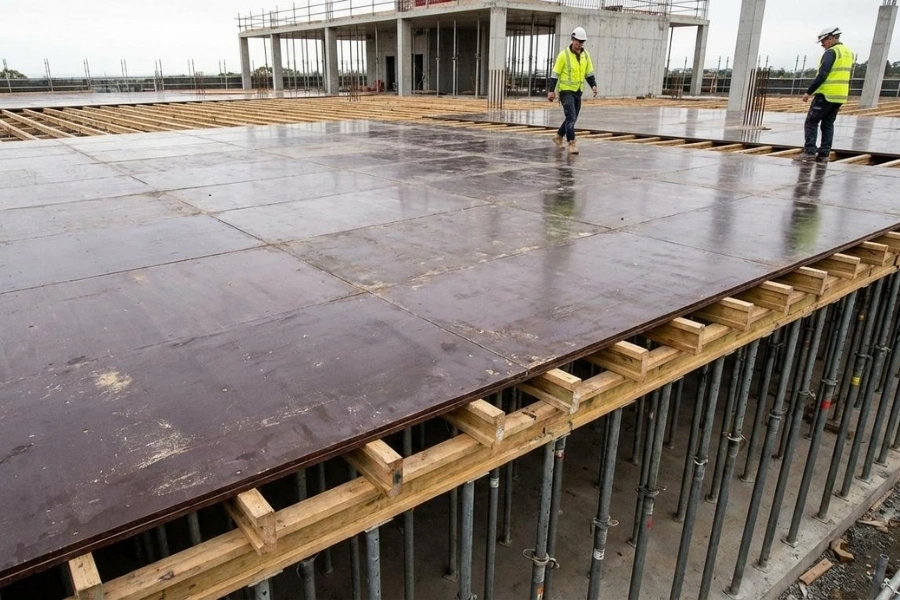
In the construction industry, the final result of concrete pouring is determined not only by the quality of the concrete mix but also by the formwork material used. Film-faced plywood is becoming an increasingly popular choice because it produces a smoother concrete surface, speeds up the construction process, and is more cost-effective for repeated use.
It’s no coincidence that many professional contractors use this material in projects ranging from high-rise buildings and warehouses to bridges and residential construction. So, what exactly makes film-faced plywood so reliable compared to regular plywood? Here’s the explanation!
What Is Film-Faced Plywood?
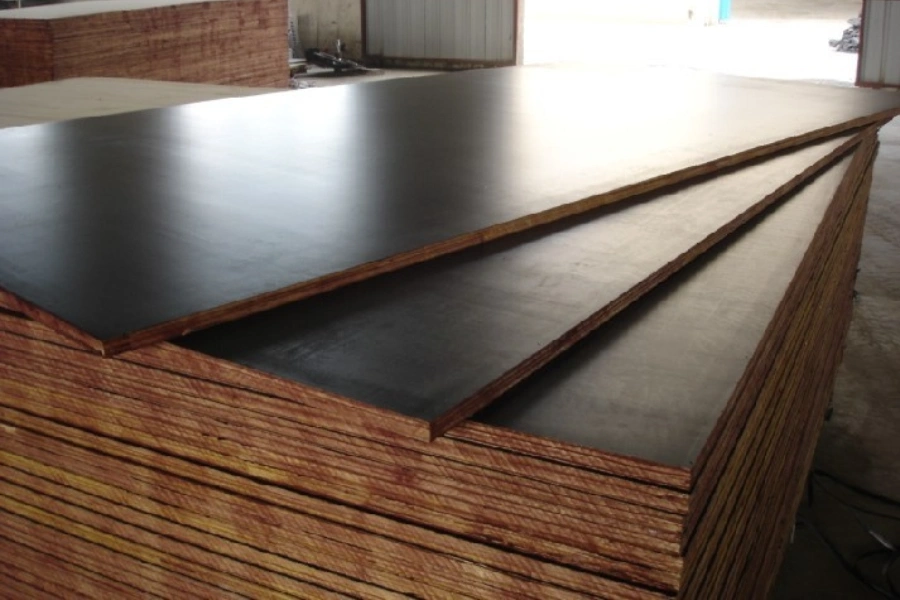
Film-faced plywood is plywood whose surface is coated with a layer of phenolic film. This layer acts as a protective barrier, making the board more resistant to water, moisture, friction, and pressure during the concrete pouring process.
Unlike standard plywood, whose surface easily absorbs cement slurry, the film layer on this material prevents the concrete mix from sticking, making the formwork removal process much easier. Because of these characteristics, this material has become a standard formwork solution in various modern construction projects.
Why Do Contractors Often Choose Film-Faced Plywood?
If you look closely, most modern construction projects now use film-faced plywood as formwork material. This isn’t just about following a trend; rather, it’s because this material offers various advantages that can improve the quality of concrete pouring while reducing project operating costs. What are they?
1. Produces a Smoother Concrete Surface
The main reason contractors use film-faced plywood is the quality of the concrete finish it produces. The smooth film layer makes the concrete surface more even, thereby reducing defects such as honeycombing, wood grain marks, rough surfaces, and small holes caused by the plywood absorbing water. As a result, the need for additional plastering or finishing can be reduced, saving on labor costs.
2. Greater Resistance to Water and Moisture
During the casting process, the formwork is constantly in contact with water and cement. If regular plywood is used, water easily seeps into the wood layers, causing the boards to warp or deteriorate more quickly. In contrast, the phenolic layer on film-faced plywood helps reduce water absorption, keeping the boards stable even when used in damp conditions.
3. Reusable
Cost efficiency is a key consideration in construction projects. With proper use and maintenance, face film can be reused multiple times without a significant decline in quality. The more usage cycles, the lower the formwork costs per project compared to using disposable materials.
4. Easier Formwork Removal
The film layer prevents concrete from easily adhering to the plywood surface. This offers several advantages, such as:
- Formwork is easier to remove.
- There is a lower risk of damage to concrete corners.
- Dismantling takes less time.
- The plywood is less likely to tear during removal.
This time efficiency is particularly helpful on large-scale projects with tight completion deadlines.
5. Greater Strength to Withstand Concrete Pressure
While the concrete is still in a liquid state, the formwork must be able to withstand significant pressure. Film-faced plywood is typically made from multiple layers of veneer bonded with high-quality adhesive, giving it good structural strength. This helps maintain the precision of the mold’s shape until the concrete hardens.
6. Helps Reduce Project Costs
Although the initial price may be higher than that of regular plywood, this cost is actually a long-term investment. The savings you’ll realize include:
- Reducing the need to purchase new formwork.
- Minimizing concrete finishing costs.
- Speeding up on-site work processes.
- Reducing the risk of material damage.
In projects involving large volumes of concrete pouring, these efficiencies can result in significant cost savings.
Tips for Choosing High-Quality Film-Faced Plywood
Before purchasing film-faced plywood, keep the following in mind!
- Choose a smooth and even film surface.
- Ensure the film layer adheres perfectly without bubbles.
- Check the thickness to meet your project’s requirements.
- Choose products with high-quality adhesive for greater water resistance.
- Buy from a trusted distributor that provides clear product specifications.
So, the reason many contractors choose plywood face film is not only because it produces a neater concrete surface, but also because it is more durable, easy to remove, reusable, and helps improve project cost efficiency. When calculated over the long term, this material actually offers better economic value than using regular plywood.
So, what are you waiting for? Get high-quality face film from Hojaya to meet your project’s formwork needs! We offer two material options that you can tailor to your needs, face film with WBP phenolic adhesive, which features high water resistance and is suitable for projects involving repeated use and more demanding working conditions; and face film with MR phenolic adhesive, which is ideal for formwork needs in general projects while delivering reliable and efficient performance.
Contact us now to get product information, project consultation, and the best quotes based on your specific requirements!
FAQ
1. What is the main function of face film?
Its main function is as a formwork material for concrete that produces a smoother concrete surface, is easy to remove, and is resistant to moisture.
2. Is face film waterproof?
Yes. The phenolic film coating on its surface helps reduce water absorption, making the panels more resistant to damp conditions during the pouring process.
3. How many times can face film be reused?
The number of uses depends on the product’s quality, usage methods, and maintenance. A high-quality product that is well-maintained can be reused multiple times.
4. What is the difference between face film and regular plywood?
Face film has a phenolic film coating that makes it more water-resistant, more durable, and produces a neater concrete surface compared to regular plywood.
5. How do you choose a good film-faced plywood?
Choose a product with a smooth film surface, one that uses high-quality adhesives such as WBP Phenolic Adhesive or MR Phenolic Adhesive, has the appropriate thickness for your needs, and comes from a trusted distributor.