

Blog
What Are the Advantages and Limitations of Meranti Wood for Frames, and When Is It Best to Use It?

Choosing a material for door and window frames is not simply about considering the price or appearance. Frames need to maintain their shape, support doors or windows, and withstand changes in temperature and humidity. Meranti wood is often chosen for door and window frames because it is easy to work with and cost-effective.
But is this material always the right choice? The answer is not as simple as “yes” or “no.” Material quality, moisture content, installation location, termite protection, and finishing can all significantly affect the final result. To find out more, let’s explore the advantages, limitations, and the best time to use this type of wood!
Advantages of Meranti Wood for Door and Window Frames
One reason this material is widely used is because it is relatively easy to work with. The wood is fairly easy to cut, shape, sand, nail, and finish. These characteristics make the frame-making process more practical, especially for workshops that require specific sizes and profiles.
Its color and grain are attractive for frames that aim to maintain a natural look. Finishes such as paint, coatings, or wood stains can be adjusted to suit both interior and exterior concepts.
Another advantage is its cost efficiency. Compared to hardwoods like teak or ironwood, this material is economical and suitable for projects with limited budgets.
Limitations You Should Understand Before Using It
Do not assume that all types of wood perform the same way in every location. Meranti wood has more limited resistance to moisture, termites, fungi, and extreme weather exposure compared with certain hardwoods that are naturally more suitable for outdoor conditions. Without proper preservation and finishing, the risk of warping, cracking, pest attacks, and deterioration can increase.
Moisture content is another factor that needs to be considered. Wood that has not been sufficiently dried may shrink after installation. For door and window frames, dimensional changes like this are not merely a visual issue. Gaps in the joints may change, and doors or windows may become more difficult to open and close. Therefore, do not only ask, “What type of wood is it?” Also ask about the material’s condition and drying process.
Read also: Not Just for Construction, These Are the Lesser-Known Benefits of Meranti Trees
When Should You Use Meranti Wood for Door and Window Frames?
For interior frames or areas that are relatively protected from rain and direct sunlight, meranti wood can be a reasonable choice. It is also an attractive option for residential projects, renovations, and interior work that seeks a balance between appearance, ease of processing, and cost.
On the other hand, for frames that are directly exposed to weather, located in highly humid areas, or required to provide high durability over the long term, a more thorough evaluation is recommended. Materials with higher natural durability may be more suitable.
If you still want to use it in areas with higher exposure risks, anti-termite and anti-fungal treatment, along with protective finishing, should become an important part of the protection system. Finishing is not only intended to improve the appearance of the surface but also to help reduce direct exposure to moisture and environmental conditions.
Meranti Wood Options from Kalimantan by Hojaya!
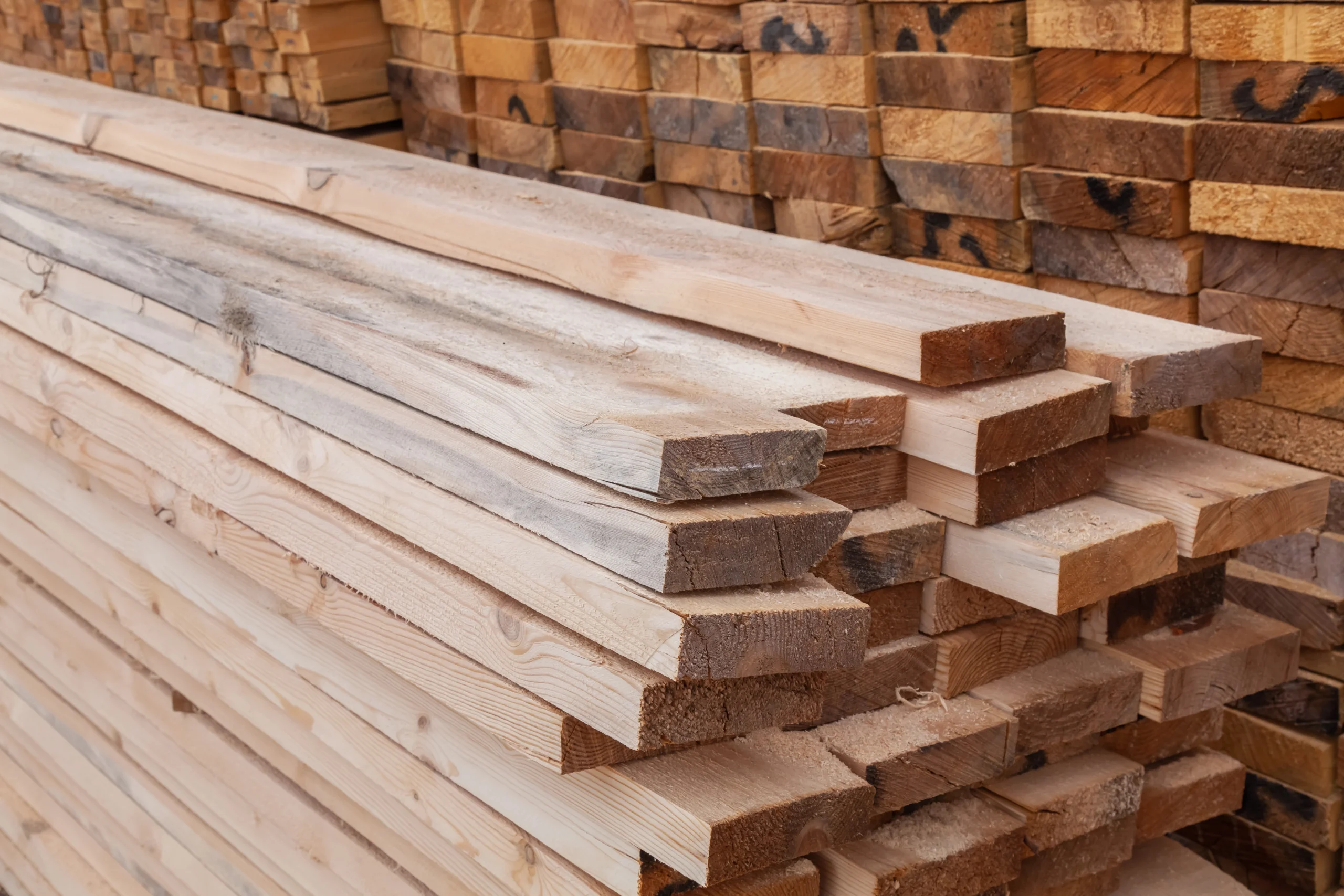
If your project requires materials for interiors, furniture, ceilings, or specific construction applications, Hojaya, a wood distributor in Bandung since 2001, provides Kalimantan Meranti in several forms, including timber battens, beams, and boards. This material has a harder texture than Borneo Jambi and offers good durability for long-term use. After undergoing a drying or kiln process, the wood’s moisture content can be adjusted to help maintain material stability before use.
The advantage is that you do not have to choose wood solely based on its type or name. We provide various wood materials with a large supply capacity, quality control, and consultation services to help match materials with project requirements.
In short, meranti wood can be an attractive option for door and window frames when you need a material that is easy to work with, has a natural appearance, and is more cost-efficient. However, factors such as moisture content, installation location, preservation, and finishing should not be overlooked. It is not simply about choosing good wood, but about choosing the right wood for its intended conditions of use.
FAQ
- Is meranti suitable for door frames?
Yes, especially for protected areas with controlled humidity conditions. For outdoor areas, protection against water, termites, fungi, and weather exposure needs to be considered more carefully.
- Is meranti wood easily attacked by termites?
This material does not have as high a natural resistance to pests as some hardwood species. Therefore, using anti-termite treatment and protective finishing can help reduce the risk.
- Does meranti wood shrink easily?
Dimensional changes can occur if the material’s moisture content has not yet stabilized. Therefore, proper drying and storage before installation are important to reduce the risk of shrinkage and warping.
- Is meranti suitable for exterior door and window frames?
It can be used with proper protection, but it is not automatically the safest option for areas that are continuously exposed to rain and heat.
- What should be considered when buying materials for door and window frames?
Consider the type and quality of the wood, moisture content, physical condition, dimensions, material origin, as well as preservation and finishing requirements.