

Blog
It Can Cost You! These Are the Critical Mistakes in Using Plywood

Plywood is indeed a go-to material in the construction and interior design industries. It’s flexible, strong, and relatively more economical than solid wood. But despite its advantages, there are many common mistakes in its use that are often overlooked, even though the consequences can result in significant losses—both in terms of cost and the quality of the final result.
The problem is, many users focus only on its basic functions without fully understanding its characteristics. In reality, each type of plywood has different specifications and usage limitations. If these aren’t taken into account, risks such as premature damage, material waste, and even structural failure can occur.
So, if you’re planning to use or frequently use plywood, let’s understand these common mistakes to avoid getting into trouble down the road!
Common Mistakes in Using Plywood
Using plywood may seem simple, but in reality, many common mistakes still occur. From choosing the wrong type to incorrect usage methods, we’ll break them down one by one!
1. Choosing the Wrong Plywood Quality and Grade
Many people focus solely on price without considering quality. In reality, plywood comes in various grades that determine its strength, durability, and appearance. Choosing the wrong grade often results in:
- Structures that deteriorate quickly
- Uneven surfaces after finishing
- A significantly shorter lifespan
In fact, plywood quality is heavily influenced by the veneer material, adhesive, and production process. If the wrong choice is made, defects such as core voids or uneven thickness can appear, weakening the structure.
Read also: Differences Between Plywood Grades A, B, and C in the Construction Industry
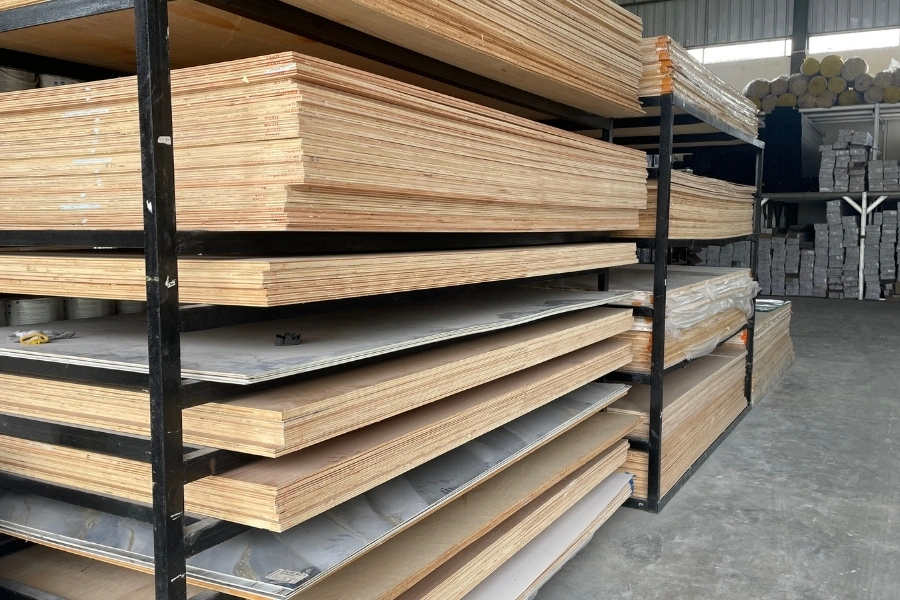
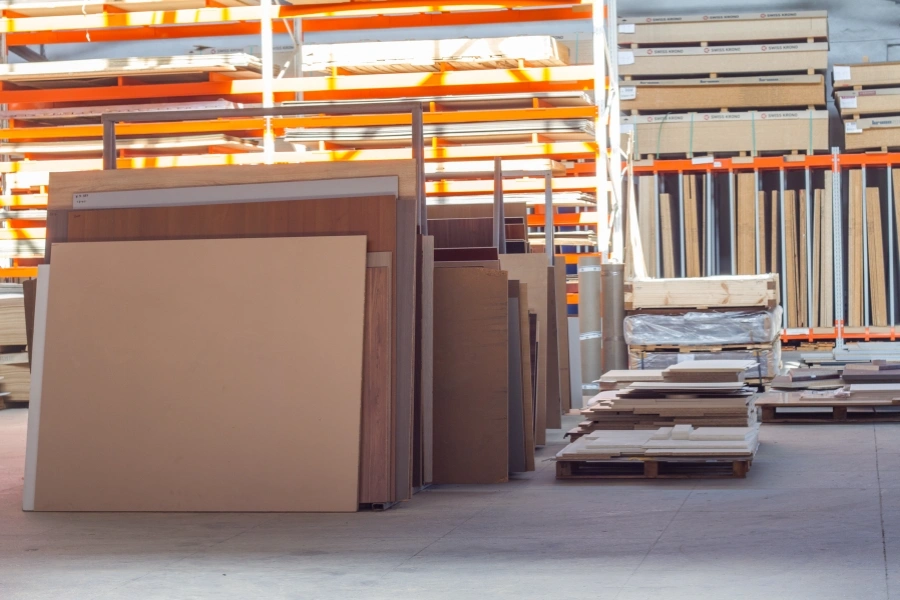
2. Ignoring Moisture and Storage
This is one of the most common mistakes. Plywood is highly sensitive to humidity. If stored improperly, it can lead to:
- Warping
- Swelling or cracking
- Delamination
Uncontrolled humidity conditions are indeed the primary cause of plywood damage, even during the production stage.
3. Not Checking for Defects Before Use
Plywood is often used immediately without inspection. However, many defects are not visible at first glance. Common defects include surface cracks, bubbling layers, and voids inside the panel. Such defects can reduce strength and cause the material to fail during use.
4. Misuse Based on Function
Not all plywood is suitable for every application. For example:
- Interior plywood used in damp areas
- Standard plywood used for concrete formwork
These mistakes can cause the material to deteriorate quickly because it does not meet the specifications. In construction, even poor bonding quality can cause the layers to peel off after several uses.
5. Inadequate Finishing and Protection
Many assume that plywood is strong enough without additional protection. In reality, finishing significantly affects its durability.
Without a coating or protective layer, plywood easily absorbs water, becomes susceptible to mold and termites, and can deteriorate quickly in outdoor areas.
Consequences of Improper Plywood Use
Minor errors in using plywood are often dismissed as trivial. However, their impact can be detrimental to long-term projects. Here are some risks that may occur:
- Significant renovation costs
- Deterioration of building or furniture quality
- Risk of structural damage
In certain conditions, internal defects such as voids within the layers can prevent the plywood from bearing loads optimally. In such cases, it’s not just a matter of aesthetics being compromised, but also concerns safety.
FAQ
1. What is the difference between plywood and multiplex?
They are generally the same; only the terms differ. Multiplex usually refers to plywood with more layers.
2. What is the lifespan of plywood?
It can last 10–20 years depending on quality, usage, and maintenance.
3. Is plywood suitable for outdoor use?
Not all types are suitable. You must use a special water-resistant type with an additional coating.
4. How can you tell if plywood is high-quality?
Check the surface, thickness, ensure there are no voids, and make sure the layers don’t peel easily.
5. Is plywood termite-resistant?
Not entirely. Additional protection, such as a termite-resistant coating, is still needed.
Well, from this we can conclude that using plywood isn’t something to be taken lightly. From selection and storage to finishing, every step must be taken seriously. But don’t forget: if you want a more durable result with minimal risk, it’s crucial to use high-quality materials from a trusted supplier.
For that, you can consider Hojaya! We provide a wide range of wood-based materials such as solid wood, high-quality plywood, blockboard, and other interior support materials like polyfilm and face film that have been tested for both construction and furniture needs. With more reliable material quality, you can minimize the risk of damage and maximize your project’s results.
So, the bottom line is: don’t just focus on the initial cost, but also consider long-term durability. Let’s contact us and get top-quality wood materials!