

Blog
Why Does Plywood Delaminate? Understanding the Causes and How to Prevent It

Ever come across a sheet of plywood with a bulging surface or edges that have started to lift? Or maybe the layers seem to be peeling apart. That’s not just a finishing issue. It could be plywood delamination, which happens when the bond between the veneer layers starts to fail. This is what allows the layers that make up the panel to separate. Left unchecked, the panel’s strength drops and the damage can spread further.
Interestingly, delamination doesn’t necessarily mean the plywood itself is low quality. Plenty of factors can trigger it. These range from the adhesive’s quality and how evenly it’s applied during production, to veneer moisture content and the pressing process. How the plywood is stored and used after purchase matters too. To make things clearer, let’s walk through the causes of plywood delamination and how to avoid it.
What Is Plywood Delamination?
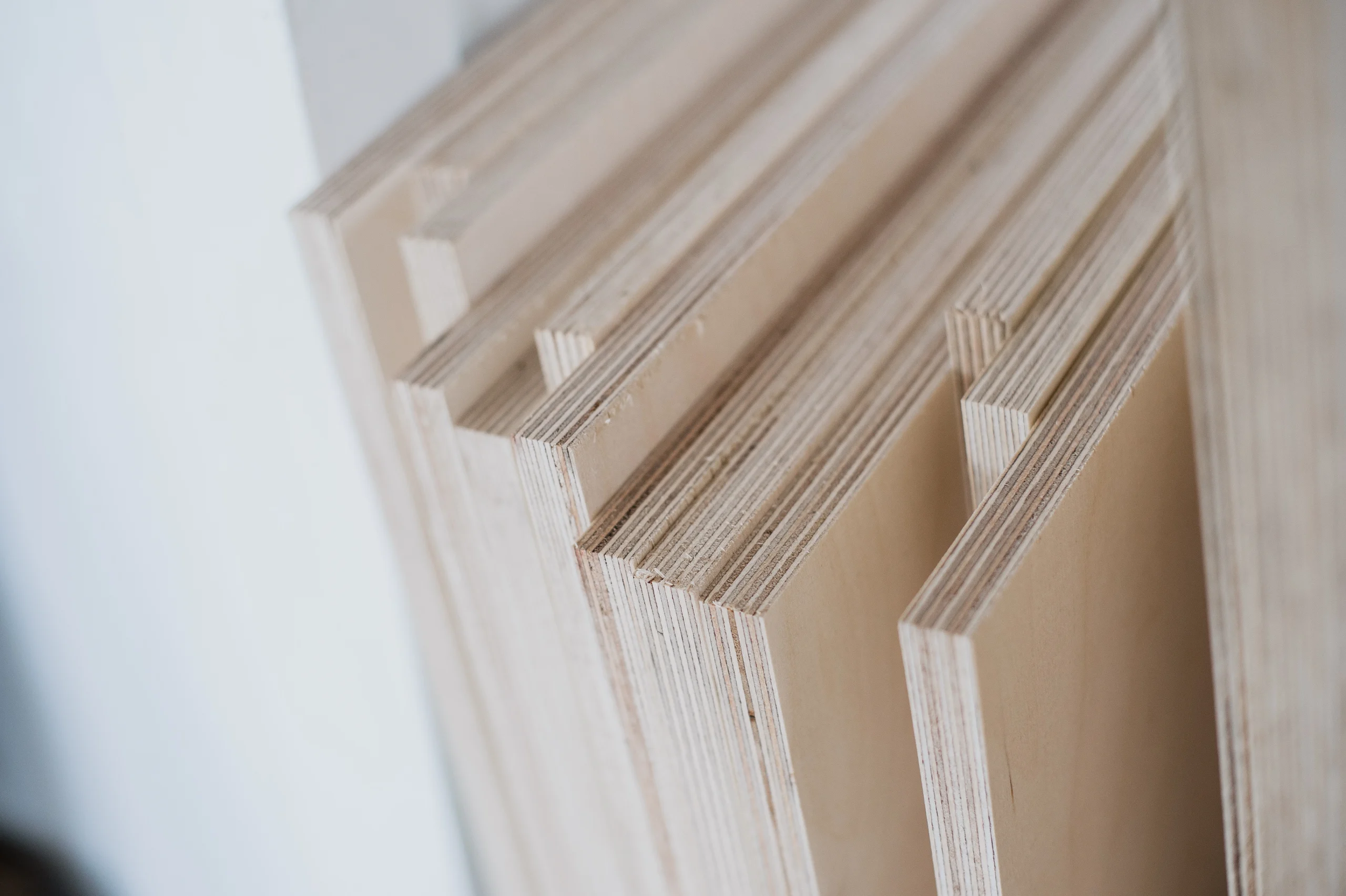
Plywood is made from several veneer sheets glued together with the grain direction alternating between layers. This cross-grain structure makes the panel more stable than a single piece of solid wood of the same size. That strength, however, depends heavily on how well each layer is bonded to the next.
When the adhesive bond fails, the veneer layers start to separate, this is what’s known as delamination. Signs include a wavy surface, bubbling, edges that swell or lift, and a hollow sound when the panel is tapped.
What Causes Delamination?
Plywood delamination doesn’t happen out of nowhere. It’s usually the result of several factors that weaken the bond between veneer layers. These range from adhesive quality and the production process, to water exposure and how the panel is stored afterward. Here’s a closer look at each one.
1. Uncontrolled veneer moisture content
Moisture content plays a major role in whether the bonding process succeeds. If the veneer is too wet during hot pressing, the water can turn to steam. This builds up pressure inside the panel, which can create voids or weaken the glue bond. On the other hand, veneer that’s too dry prevents the adhesive from being absorbed properly. This is why controlling moisture content isn’t just an extra step, it’s a core part of plywood quality.
2. Insufficient or uneven glue spread
Adhesive is the main thing holding the veneer layers together. Problems arise when the glue spread is too thin or uneven. The wrong type of adhesive for the application can also cause issues. Areas with too little adhesive become weak points. Over time, mechanical stress or changes in humidity can cause those layers to start separating.
3. Incorrect hot press temperature and pressure
The hot pressing process needs to match the adhesive’s characteristics and the veneer’s moisture content. It also needs to account for the panel’s thickness. Uneven pressure can prevent the veneer from bonding properly. An inconsistent heat cycle can also leave the adhesive under-cured, or cause steam-related defects. In other words, plywood quality isn’t determined by the type of wood alone. It also depends on how consistent the production process is.
4. Frequent exposure to water or moisture
The risk doesn’t end once the plywood leaves the factory. Water can seep in through cut edges, screw holes, damaged surfaces, or joints, and reach the inner layers. Repeated wet-dry cycles cause the wood to expand and contract. Over time, this puts stress on the glue line and speeds up deterioration.
5. Choosing the wrong plywood grade
Not all plywood is designed for the same environment. Panels meant for dry interior use have very different requirements from those used in humid or exterior applications. Choosing based on price alone is risky. The adhesive grade and moisture resistance need to match the project’s location and function.
How to Prevent Plywood Delamination
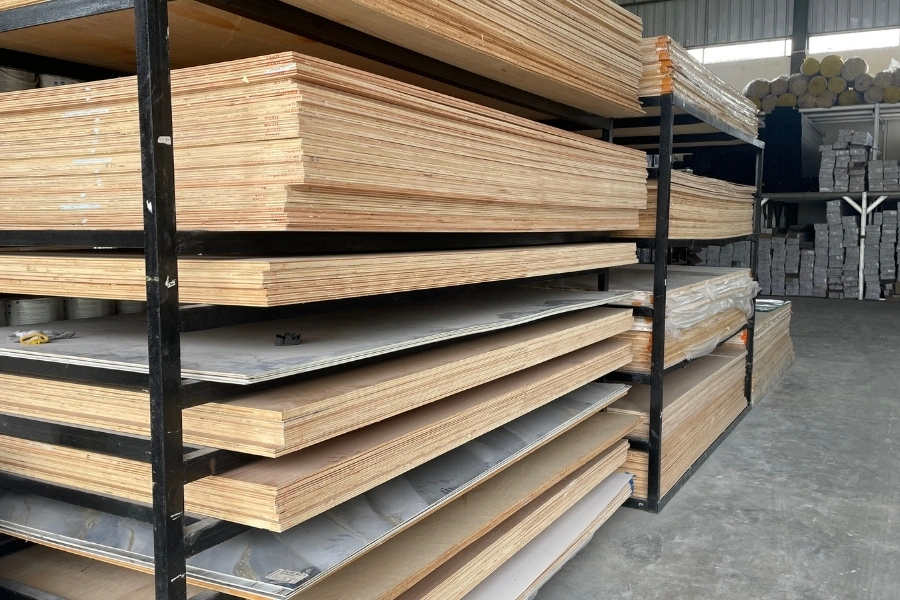
Choose plywood suited to your project’s needs, then store it flat in a dry space. Make sure it’s protected from water and direct sunlight. Protect the edges or cut sections with edge sealing to help reduce moisture penetration. Before installation, inspect the panel for bubbling, lifted layers, or gaps.
Read more: Tips for Storing Plywood Material to Prevent Damage Before Use
Choose Plywood That Matches Your Application!
Preventing plywood delamination really starts with material selection. Don’t just look at thickness or price per sheet. Also consider the plywood type, bonding quality, moisture resistance, and what the project actually needs.
For construction, furniture, and interior projects, Hojaya offers a range of plywood in thicknesses from 3 mm to 18 mm. This includes standard plywood and marine-grade plywood. We also carry other materials such as HMR, blockboard, fancy plywood, polyfilm, and film face plywood. This way, you can pick what best fits your intended use.
For applications that call for extra moisture resistance, such as interior areas with higher water exposure, we also stock HMCP. It’s built for humid environments and available in thicknesses from 9 to 18 mm.
So there’s no need to force one type of plywood to work for every situation. Get in touch to talk through your project’s function, installation location, and specifications. That way, you’ll end up with the right material for the job.
At the end of the day, durable plywood isn’t just about picking a sheet that looks good on the shelf. Bonding quality, moisture resistance, and how it’s stored all play a part in how long it lasts. So does how it’s installed. Choosing the right material from the start goes a long way toward keeping plywood delamination in check.
FAQ
- What’s the main cause of plywood delamination?
Weak bonding, uneven adhesive spread, and incorrect veneer moisture content are common causes. An improper pressing process and exposure to water or humidity after installation also play a role.
- Can water cause plywood to peel apart?
Yes. Water that gets into the inner layers of a panel can weaken the glue line. This is especially true if the plywood wasn’t designed for humid environments or is repeatedly exposed to wet-dry cycles.
- How can you tell if plywood is starting to delaminate?
Look for bubbling, a wavy surface, edges that are swelling or lifting, and gaps between the veneer layers. A hollow sound when the panel is tapped is another telltale sign.
- Does high-quality plywood mean it will never delaminate?
No material is entirely risk-free. Plywood with good bonding and tight production controls tends to hold up better. Even so, poor storage, water exposure, or improper use can still lead to damage.
- How do you choose plywood that’s less prone to delamination?
Match the plywood type and grade to its intended environment, then inspect the panel before buying. Make sure it’s stored and installed correctly. For applications involving moisture, choose a specification that’s actually built for those conditions.