


Blog
Things to Check Before Buying Plywood Material in Bulk

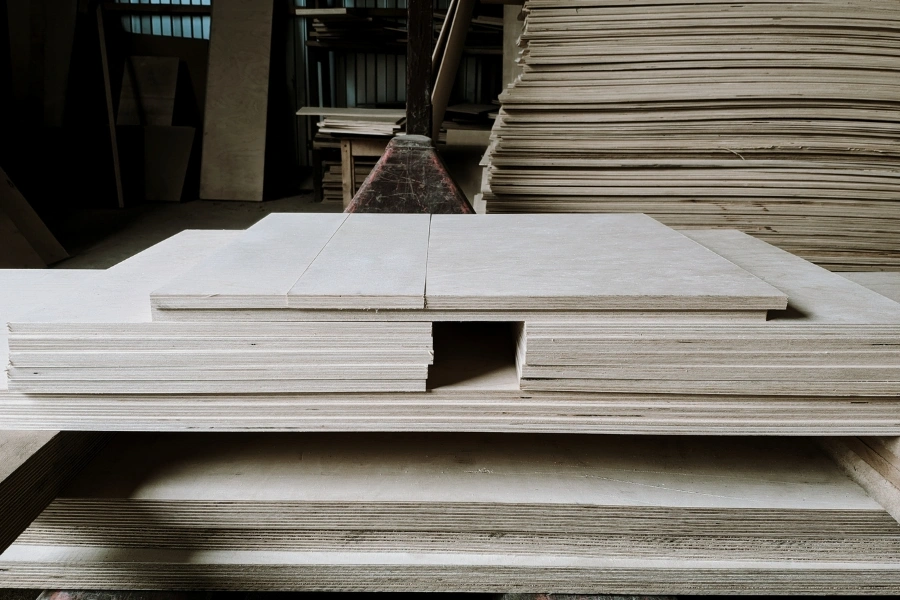
When purchasing plywood material for large-scale construction projects, interior design, or furniture production, many people focus solely on price. However, a low price isn’t necessarily beneficial if the material’s quality doesn’t meet the required specifications. Choosing the wrong plywood can lead to cost overruns, project delays, and a final product that isn’t durable enough.
Therefore, before making a bulk purchase, you must be more thorough. There are several important aspects you need to examine in detail. What are they?
What to Check Before Buying Plywood Material in Bulk?
Buying plywood in bulk requires extra care to ensure the quality and project requirements remain on track. Therefore, before placing an order, check the following to avoid the risk of financial loss, project delays, or materials that don’t meet specifications!
1. Check the Type of Plywood Used
Not all plywood is suitable for the same applications. Each type has different characteristics and functions. The most commonly used types are:
- Standard plywood for general purposes.
- Marine plywood for areas frequently exposed to moisture.
- Blockboard for furniture and interior applications.
- MDF for decorative panels and indoor furniture.
- HMR (High Moisture Resistance) for areas with higher humidity levels.
Ensure the type of plywood matches your project’s needs to avoid unnecessary costs or a decline in the quality of the final result.
2. Check the Actual Thickness, Not Just the Label
One thing that’s often overlooked is the actual thickness of the plywood. In the field, it’s not uncommon to find discrepancies between the listed specifications and the actual measurements. For example, plywood sold as 12 mm thick may actually be slightly thinner in practice. This small difference might not seem significant for a single sheet, but it can have a major impact when used in large-scale projects.
To avoid this, use a measuring tool to sample several sheets before making a purchase.
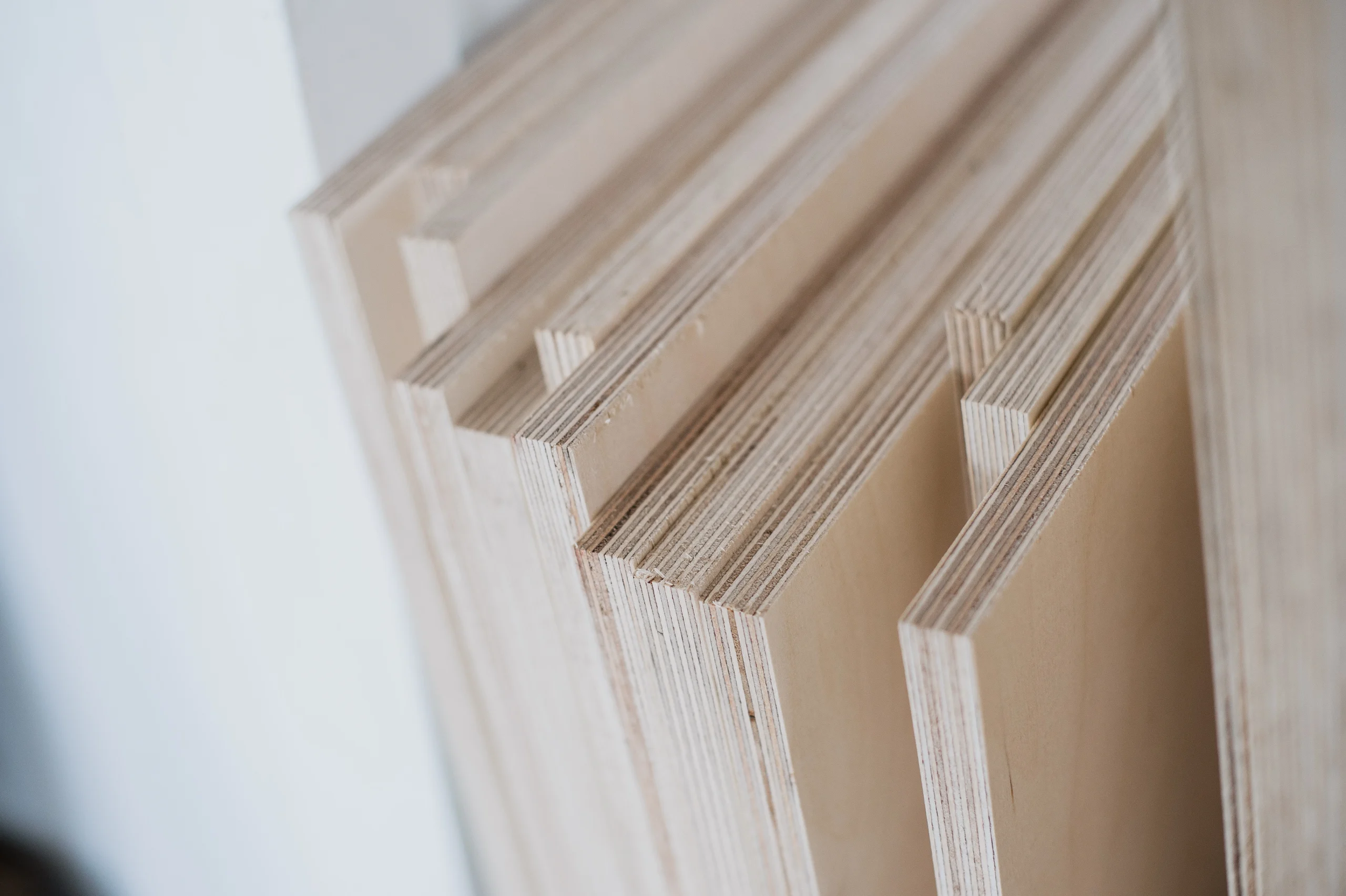
3. Pay Attention to the Quality of the Plywood Core
The core is the main factor that determines the strength of plywood. Characteristics of a high-quality core include:
- Neatly arranged layers.
- Few empty voids.
- Precise veneer joints.
- Does not crack easily when cut.
A poor-quality core often causes the board to warp, break easily, and have lower durability over the long term.
4. Ensure the Adhesive Type Meets Your Needs
Many buyers only look at the exterior appearance of the plywood material without paying attention to the type of adhesive used. There are typically several categories of adhesives, including:
- MR (Moisture Resistant) for dry areas.
- WBP (Weather and Boil Proof) for areas requiring higher water resistance.
- Specialized waterproof adhesives for specific construction applications.
If the plywood is intended for kitchens, bathrooms, or semi-outdoor spaces, the choice of adhesive type is a critical factor.
5. Check the Flatness and Straightness of the Panels
When purchasing plywood in large quantities, conduct a visual inspection of several random samples. Check whether the panels:
- Are warped.
- Are wavy.
- Have imprecise angles.
- Show signs of delamination (layers peeling off).
Uneven plywood can complicate the installation process and increase labor costs.
6. Inspect the Quality of the Face and Back Surfaces
High-quality plywood typically has a smooth texture, uniform color, minimal patches, and no cracks or holes. Especially for premium furniture and interior projects, the quality of the face and back layers will affect the final finish.
7. Ensure Consistent Supplier Inventory
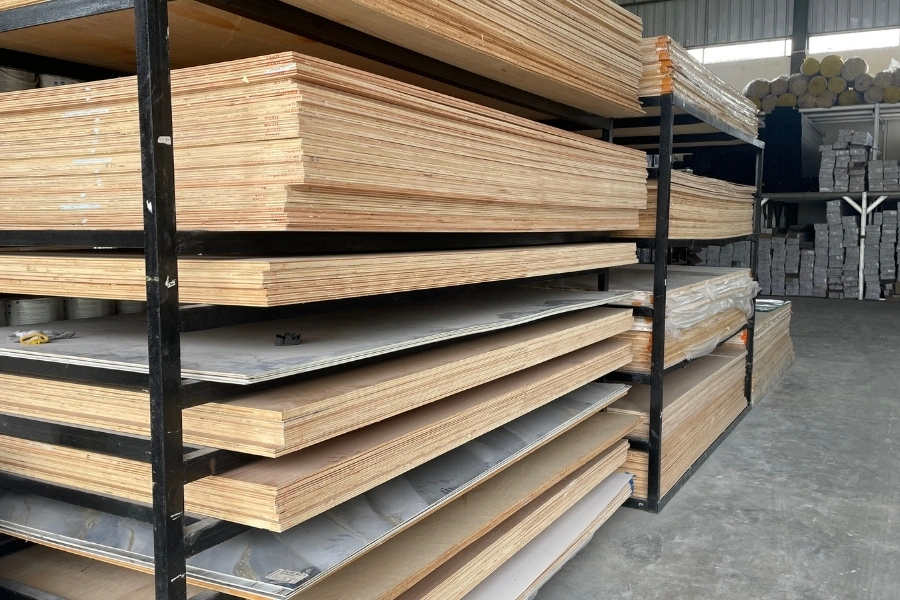
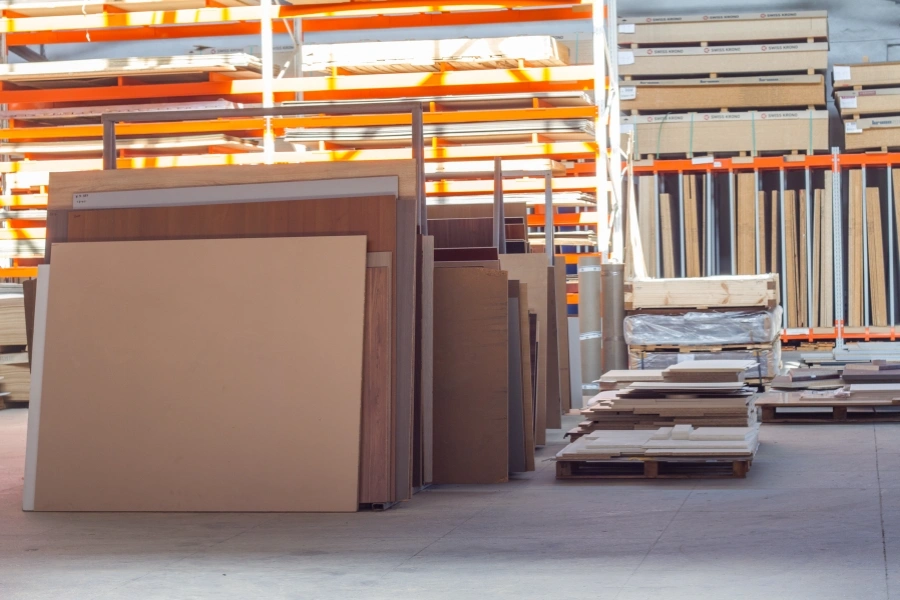
For large-scale projects, consistent inventory availability is a factor that must not be overlooked. Delays in material supply can hinder project progress and may even lead to variations in quality if procurement is done in stages. Therefore, choose a distributor that is experienced in handling large-scale project needs.
Hojaya offers more than 50 types of wood and plywood material with stock ready to serve projects ranging from small to large, ensuring material needs are met more quickly and efficiently. For orders of 500 sheets, we source them from the same production batch to ensure uniform quality, color, and thickness.
Therefore, before making a purchase, ask about:
- Stock capacity.
- Delivery time.
- Quality consistency across batches.
- Warranty or return policy.
8. Request a Sample Before Placing a Large Order
This step is often overlooked, yet it’s crucial. By requesting a sample first, you can verify:
- Coating quality.
- Material strength.
- Ease of workability.
- Suitability for your project’s needs.
So, when purchasing plywood material in large quantities, it’s not enough to simply compare prices among suppliers. You also need to check the type of plywood, the quality of the core, the actual thickness, the type of adhesive, the surface condition, and the consistency of inventory. That way, you can minimize the risk of losses and maximize your project’s results.
To meet your needs, Hojaya offers a wide selection of plywood, ranging from blockboard, MDF, HMR, HMCP, and many more. We also carry polyfilm, fancy, and filmface options that can be tailored to the diverse needs of contractors, workshops, and personal renovation projects.
You can place bulk orders to support both small- and large-scale projects. No need to worry about shipping, as Hojaya delivers throughout Indonesia, ensuring your project material needs are met more easily and efficiently. As a major plywood distributor in Bandung since 2001, we’re committed to providing a wide selection of high-quality plywood and wood materials with professional service to meet the needs of construction, interior design, and industrial projects.
What are you waiting for? Contact us today!
FAQ
1. How can you tell if plywood is of good quality?
Check the surface condition, core quality, actual thickness, and the type of adhesive used. High-quality plywood typically has neat layers and minimal voids.
2. Is plywood water-resistant?
Not all plywood is water-resistant. Its resistance depends on the type of adhesive and the product specifications.
3. Why is it important to check the thickness of plywood before buying?
Because there may be a discrepancy between the listed dimensions and the actual dimensions, which can affect the outcome of your construction or furniture project.
4. What is the difference between plywood and blockboard?
Plywood consists of multiple layers of veneer glued together in a cross-grain pattern, while blockboard uses a core made of wood pieces covered with veneer on the outside.
5. Is buying plywood in bulk more cost-effective?
Yes, wholesale prices are generally more economical. However, be sure to verify that the product’s quality and specifications meet your needs to avoid incurring additional costs later on.
6. Where can I buy plywood in bulk in Bandung?
You can purchase it at Hojayakayu, Jl. Kopo No. 212, +62-819-0808-0573.