

Blog
Tips for Storing Plywood Material to Prevent Damage Before Use

Many people focus on choosing high-quality plywood but often overlook how to store it properly. In fact, improper storage of plywood material can lead to various problems, such as warping, mold growth, swelling, and cracking, before it is even used.
Such damage is certainly detrimental because it can compromise the quality of the final project, whether for construction, interior design, or furniture making. Moreover, the significant fluctuations in temperature and humidity in Indonesia mean that plywood storage requires special attention.
So, how do you store plywood properly to ensure it remains durable and ready for use at any time? Let’s check out these tips!
Tips for Storing Plywood Material
The quality of plywood depends not only on its materials and production process but also on how it’s stored. Before being used for various construction or furniture needs, plywood requires proper storage. Here are the tips!
1. Store in a Dry, Non-Damp Place
Plywood’s main enemy is excess moisture. Although some types have fairly good water resistance, long-term exposure to moisture can still damage its structural layers.
Choose a storage area with good air circulation that is protected from rain seepage and standing water. Avoid storing plywood directly near bathrooms, open areas, or warehouses that frequently experience leaks. If possible, use a room humidity meter to ensure storage conditions remain ideal.
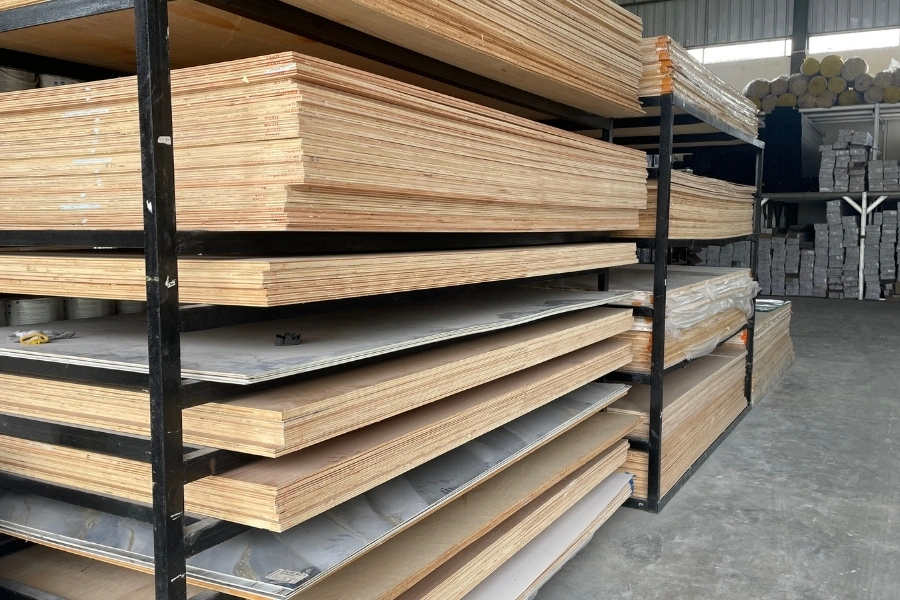
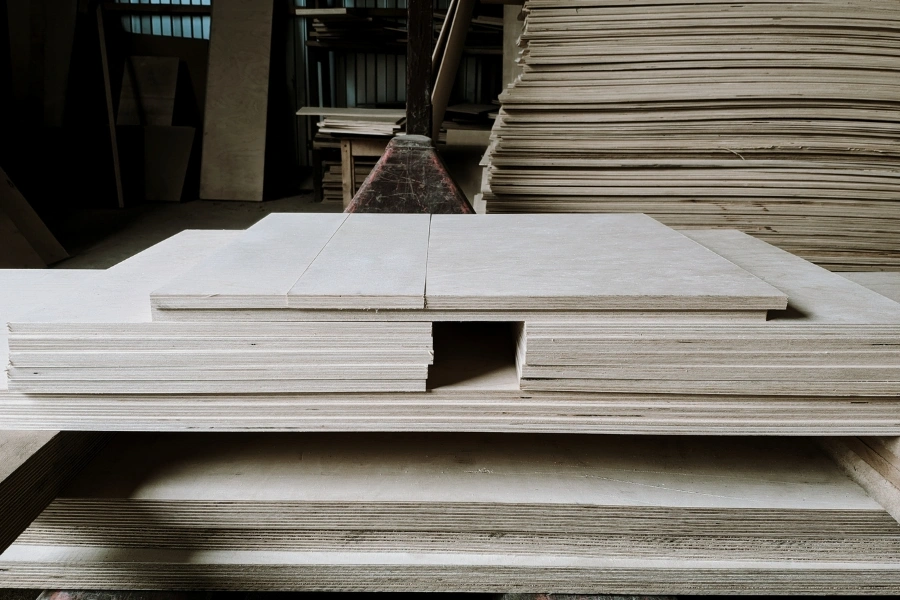
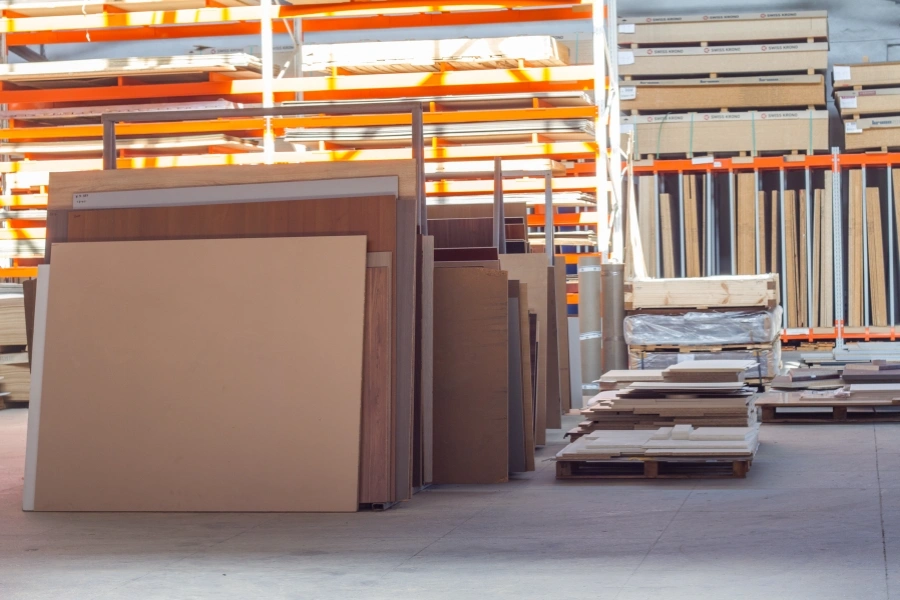
In our warehouse, thousands of plywood sheets are stored on pallets, 10–15 cm above the floor.
2. Do Not Place Directly on the Floor
A common mistake is stacking plywood directly on the floor. This risks the sheets absorbing moisture from the floor surface, especially on concrete floors that aren’t completely dry. Therefore, use wooden pallets, support beams, or storage racks to create space between the plywood and the floor. Ideally, maintain a gap of about 10–15 cm to ensure proper air circulation.
3. Store in a Flat Position
Plywood should be stored horizontally or flat. If plywood material is left standing upright for a long time, the sheets will warp due to uneven weight distribution. Therefore, ensure that the entire surface is adequately supported. If any part is left unsupported, the risk of warping increases. For large quantities, stack them neatly and in a straight line so that the pressure is distributed evenly.
4. Cover to Protect from Dust and Water
Accumulated dust does not directly damage plywood, but it does affect the surface quality during the finishing process. Use tarps, protective plastic, or special covers to protect the stacked plywood from dust, water splashes, and direct sunlight. However, make sure the cover isn’t too tight so that air can still circulate and condensation doesn’t form.
5. Avoid Direct Sunlight
Many people think that drying plywood in the sun makes it last longer. In fact, excessive exposure to sunlight causes drastic changes in the plywood’s moisture content. As a result, the surface may warp, develop fine cracks, or even change in dimensions. Store the plywood in a shaded area with a relatively stable temperature to maintain its quality.
6. Check the Condition of the Plywood
If plywood is stored for a long time, check it regularly. Look for signs of mold, termite infestation, warping, or damage to the surface layer. This way, problems can be detected early so they don’t develop into more severe damage.
See also: Effective Ways to Prevent and Clean Mold on Plywood Surfaces
How Long Can Plywood Be Stored Before Use?
Under ideal storage conditions, plywood can last for months to over a year without significant deterioration in quality. However, the storage duration is still influenced by the type of plywood, environmental conditions, and the quality of its base materials. Therefore, ensure the plywood material is always stored in a dry, level area, protected from extreme weather.
Thus, the quality of plywood is determined not only at the time of purchase but also by how it is stored before use. Proper storage helps maintain the plywood’s shape, strength, and durability, ensuring it remains in optimal condition when needed for various projects.
Well, if you’re looking for high-quality plywood and lumber, Hojaya is the place to go! We offer a wide selection of plywood materials, including MC Uty, blockboard, MDF, HMR, PVC board, and many more all suitable for construction, interior design, and furniture making. With high-quality materials and proper storage, your finished projects will be neater, stronger, and more durable over the long term.
Let’s make sure the materials for your project are top-notch from the very beginning. Contact us for a consultation and discover a wide selection of high-quality plywood ready to fully support your construction and interior design needs!
FAQ
1. Does plywood have to be stored horizontally?
Yes. Horizontal or flat storage is better because it prevents the plywood from warping due to uneven weight distribution.
2. Can plywood be stored outdoors?
It is not recommended. Plywood should be stored in a covered area protected from rain, direct sunlight, and high humidity.
3. Why does plywood develop mold when stored?
Mold usually appears due to damp storage conditions and poor air circulation.
4. Can warped plywood still be used?
It depends on the extent of the damage. If the damage is minor, it can sometimes be repaired. However, if the damage is severe, the quality and strength of the plywood are usually compromised.
5. What is the ideal distance between the plywood and the floor?
It’s best to leave a gap of at least 10–15 cm by using pallets or support beams to prevent moisture absorption from the floor.