


Blog
When Is Phenolic More Cost-Effective Than Polyfilm for Formwork Plywood?

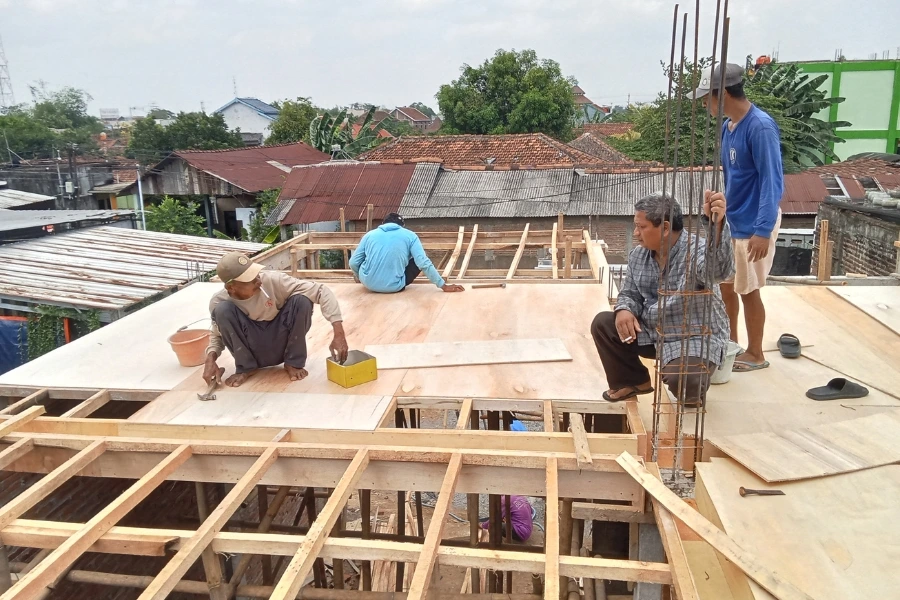
Choosing formwork plywood often starts with a simple question: which one is cheapest per sheet? But for construction projects, purchase price isn’t the only cost to consider. There’s also lifespan, the number of pours, site conditions, cast quality, and replacement costs.
This is where comparing phenolic and polyfilm gets interesting. Both have surfaces designed to resist water and help produce a smooth concrete finish. However, their characteristics differ, so the point where each becomes cost-effective isn’t always the same.
To help you understand the difference and avoid picking the wrong one, let’s walk through the comparison.
What’s the Difference Between Phenolic and Polyfilm?
In simple terms, polyfilm uses a poly or resin coating on the plywood surface. It’s available in 9–18 mm thicknesses and typically holds up for around 3 to 4 uses in formwork applications.
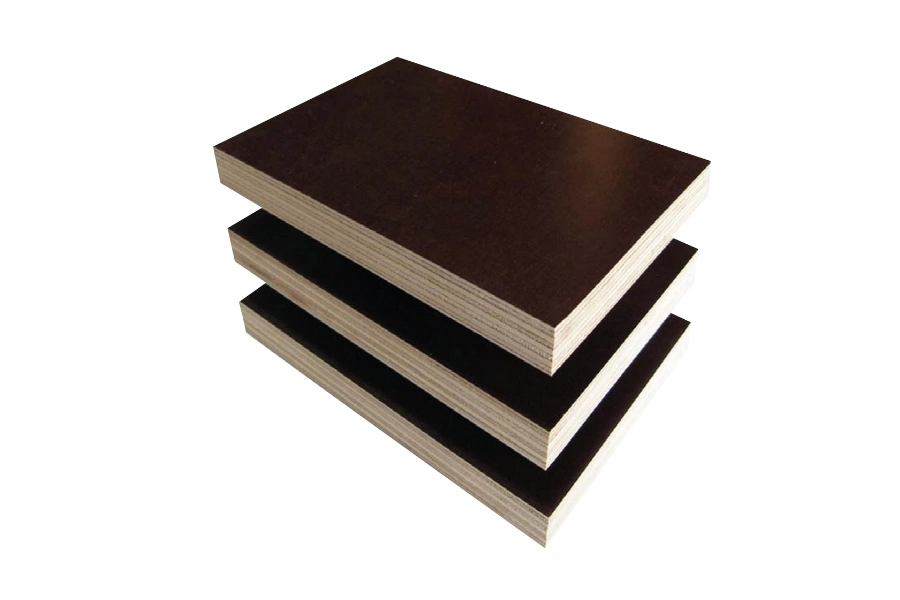
Phenolic, on the other hand, uses a phenolic resin film as its surface layer. There are two variants: Phenolic Lem MR and Phenolic Lem WBP. Phenolic Lem MR is meant for applications that need moisture resistance. WBP offers higher resistance to water and weather conditions.
This distinction matters because material cost should be calculated based on cost per use, not just the price of a single sheet.
When Is Phenolic More Cost-Effective Than Polyfilm?
The answer becomes clear once plywood is used repeatedly. Here’s a simple way to look at it:
Cost per use = price per sheet ÷ number of uses
If polyfilm costs around Rp200,000 per sheet and can be used 3 times, the material cost comes to about Rp66,700 per pour. Phenolic, priced around Rp300,000 and usable 5 times, costs about Rp60,000 per pour. In other words, even though phenolic starts out more expensive, its longer lifespan can make it the more economical option per use.
That said, reuse figures shouldn’t be treated as fixed numbers. Hojaya itself lists polyfilm’s typical lifespan at around 3 to 4 uses, while Phenolic Lem MR runs about 4 to 6 uses. Actual lifespan still depends on how the formwork is removed, whether a release agent is used, surface condition, storage, and the quality of the plywood core.
What Determines Formwork Plywood Costs?
In real-world projects, several factors are often overlooked when calculating costs. What are they?
First, pour frequency. If a panel is only used once or twice, polyfilm’s lower upfront cost can be the practical choice. For projects with repeated pour cycles, the lifespan difference starts to matter more.
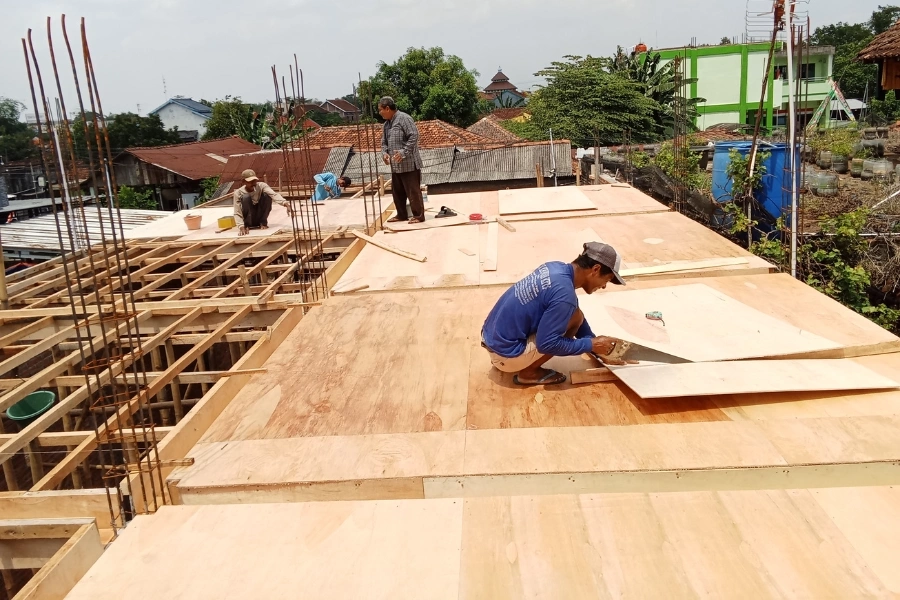
Second, site conditions. Outdoor work with heavy rain and high humidity needs a material with better water resistance. In these conditions, phenolic WBP makes more sense than choosing based on upfront price alone.
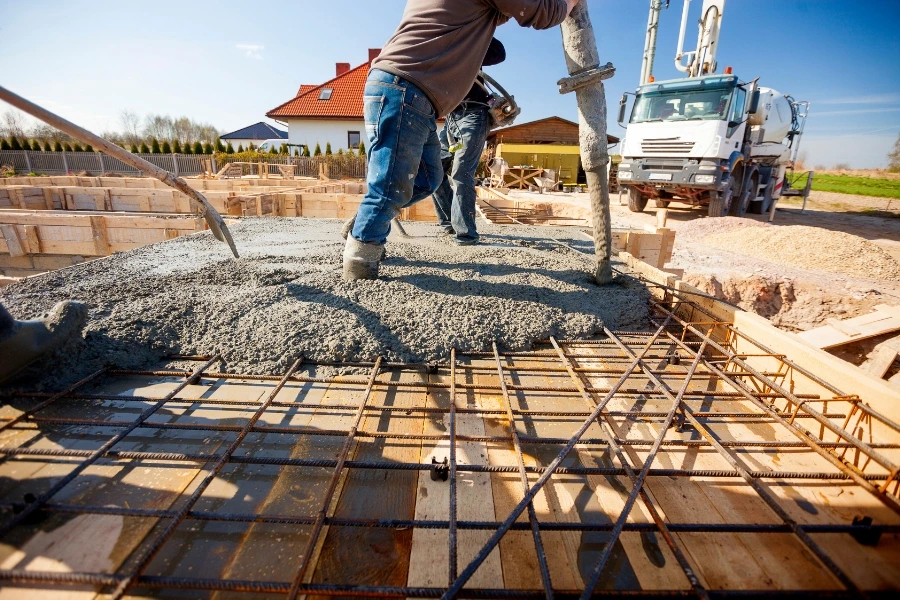
Third, cast quality. A more stable surface reduces the amount of repair work needed after the formwork is removed. So material cost shouldn’t be considered separately from concrete finishing costs.
Fourth, site damage. Plywood that’s frequently impacted, nailed repeatedly, or stored in damp conditions can lose its lifespan faster. In these cases, catalog reuse estimates won’t automatically apply.
So, Which One Is More Economical?
It’s not accurate to say phenolic is always cheaper than polyfilm. For projects with low reuse cycles and tight upfront budgets, polyfilm can be the practical choice. It works well for formwork needing around 3 to 4 uses.
On the other hand, when a project requires multiple pours, site conditions are demanding, and panel replacement costs start adding up, phenolic can offer a lower cost per use. For outdoor projects or those needing higher water resistance, Phenolic WBP becomes the more rational option.
If you’re sourcing formwork plywood, don’t just compare price per sheet. Also compare target reuse, adhesive type, water resistance, thickness, and core quality against your project conditions. Hojaya offers a range of construction materials, including Polyfilm, Phenolic Lem MR, and Phenolic Lem WBP, so you can pick the material that fits your job.
In short, phenolic starts to pay off once its extra lifespan offsets the higher purchase price. This makes the most sense for projects needing several pour cycles. So it’s not always the cheapest material upfront that’s the most economical choice. It’s the one with the most sensible cost per use for your specific project. Get in touch with us right now.
FAQ
- Is phenolic better than polyfilm for formwork?
Not always. Both serve a similar function, but phenolic is more appealing for projects needing repeated use and better resistance to demanding site conditions.
- How many times can polyfilm be used for formwork?
Polyfilm can typically be used around 3 to 4 times, depending on usage conditions and how well it’s maintained.
- What’s the difference between Phenolic MR and WBP?
MR, or Moisture Resistant, is meant for applications with more limited moisture exposure. WBP, or Weather and Boil Proof, offers higher resistance to water and outdoor conditions.
- Can formwork plywood be reused multiple times?
Yes, especially materials designed specifically for formwork, like polyfilm or phenolic. Actual reuse depends on panel quality, removal method, maintenance, and site conditions.
- Where can I get plywood materials for my project?
Hojaya offers a wide range of wood and plywood materials, including Polyfilm and Film Face Phenolic, with options suited for construction and large-volume projects.