

Blog
Types of Plywood and Their Uses in Home Interiors

Did you know that the type of plywood you choose can determine how durable your furniture and home interiors will be? Many people focus more on a room’s design or color, even though the material plays a major role in determining strength, durability, and a neat, aesthetically pleasing finish. It’s no wonder that plywood has become a favorite material—it’s known for being strong, stable, easy to shape, and suitable for a wide range of interior needs.
However, not all plywood has the same quality and functionality. Each type has different characteristics, levels of durability, and applications—ranging from kitchen sets, cabinets, and wall panels to premium furniture. If you choose the wrong type, it’s possible that the furniture will deteriorate more quickly or won’t suit the room’s needs.
So, what types are available, and how do you choose the most suitable one for your home’s interior?
Types of Plywood for Home Interiors
Each type of plywood has different advantages and functions, so your choice should be tailored to your home’s interior needs. To avoid making the wrong choice, familiarize yourself with some of the most commonly used types below!
Read also: A Simple Guide to Choosing the Right Type of Plywood for Beginners
1. Hardwood Plywood
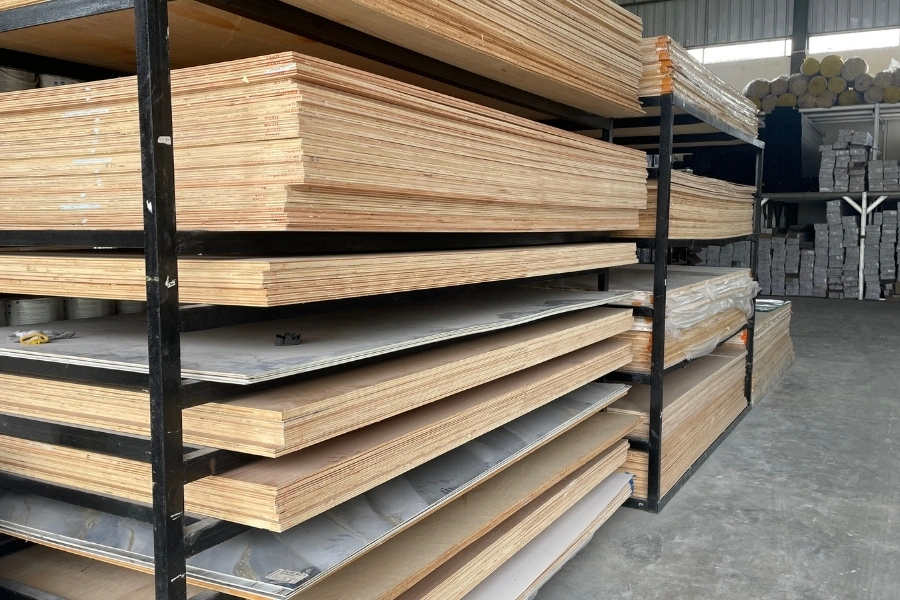
Hardwood plywood is made using veneers from hardwoods such as meranti, keruing, or other types of hardwood. This type is typically used for kitchen sets, wardrobes, desks, and storage cabinets.
Its characteristics include:
- High durability.
- Ability to support heavy loads.
- Suitable for premium furniture.
- More impact-resistant.
If you want furniture that will last for years, hardwood plywood is a worthy option to consider.
2. Softwood Plywood
Softwood plywood is made from softwoods such as pine or cedar. It’s typically used for lightweight shelves, interior decor, wall panels, and furniture back panels. What are its advantages?
- Lighter weight.
- Relatively more affordable.
- Easy to install.
- Suitable for simple interior needs.
3. Marine Plywood
Marine plywood is designed using high-quality, water-resistant adhesives, giving it significantly better resistance to moisture. This material is ideal for areas frequently exposed to steam or water, such as kitchen cabinets, sink cabinets, laundry areas, and furniture near bathrooms.
Although it’s known as water-resistant plywood, that doesn’t mean this material can be submerged in water continuously. Its primary function is to enhance resistance to humid environments.
4. Flexible Plywood
As the name suggests, flexible plywood can be bent without breaking easily. This type of plywood is often used to create curved interior designs, such as:
- Decorative walls
- Curved ceilings
- Reception desks
- Custom furniture
5. Fancy Plywood
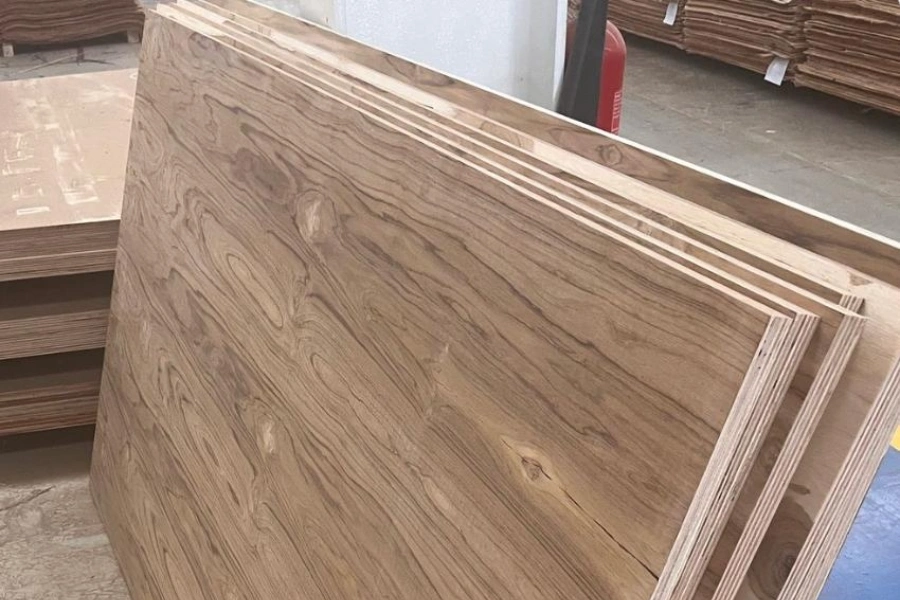
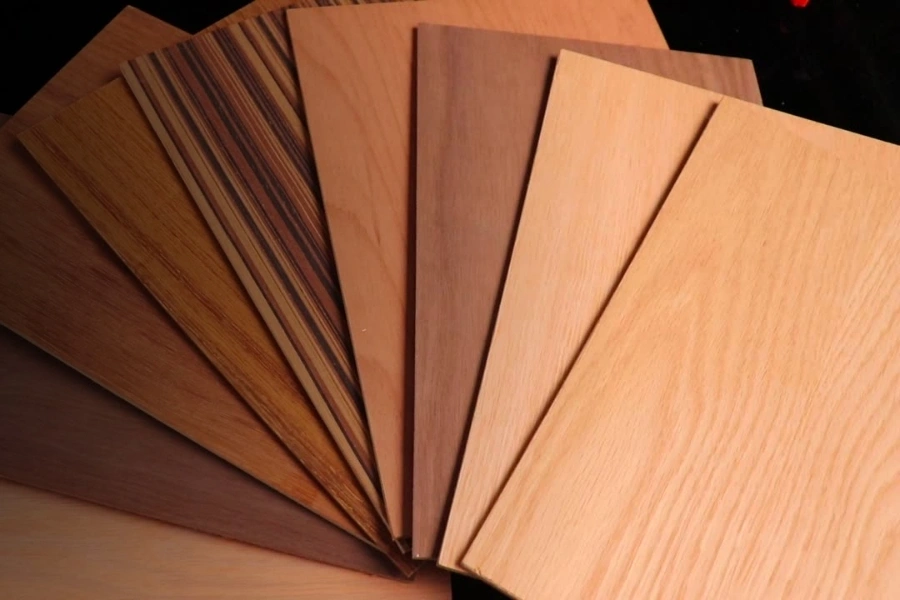
Fancy plywood features a decorative wood veneer layer on its surface. It has a more elegant appearance due to its natural wood grain patterns, such as oak, walnut, teak, and ash. This type is widely used for wall panels, premium cabinets, tables, hotel interiors, and exclusive furniture. With the right finish, fancy plywood can create a luxurious look without the need for solid wood.
6. MDF (Medium Density Fiberboard)
Although technically different from plywood, MDF is often used as an alternative in interior design projects. It has a smooth surface, is easy to paint, is suitable for duco finishes, and is quite affordable. However, MDF is not well-suited for humid areas because it absorbs water more easily than plywood.
How to Choose the Right Type of Plywood?
Choosing the right type of plywood isn’t just about price. Before making a decision, there are several important factors you should consider, including:
1. Consider the Installation Location
For humid areas like the kitchen, choose plywood with better water resistance. For living rooms or bedrooms, standard plywood is usually sufficient.
2. Consider Thickness
The heavier the load to be supported, the thicker the plywood needed. As a general guide:
- 3–6 mm for decorative panels
- 9–12 mm for lightweight cabinets
- 15–18 mm for tables, cabinets, and kitchen sets
3. Check Surface Quality
Ensure the surface is flat, free of warping and cracks, and has a neat veneer finish.
4. Choose from a Trusted Distributor
High-quality plywood will have good density, precise dimensions, and more stable adhesive quality, resulting in a longer service life.
Therefore, choosing interior materials is not just about an attractive appearance, but also about durability and long-term functionality. By understanding the characteristics of each type of plywood, you can tailor the material to your needs—whether for kitchen sets, cabinets, wall panels, or various other pieces of furniture. The result will not only be more aesthetically pleasing but also sturdy and long-lasting.
To ensure the best possible results, be sure to choose plywood from a trusted distributor. Hojaya offers a wide selection of plywood materials for interior needs, ranging from fancy plywood, MDF, blockboard, HMR, and HMCP to polyfilm and film-faced plywood. These materials are available in various sizes and specifications, and our products are ready to support your home construction, renovation, and commercial projects, with delivery available throughout Indonesia. This makes it easier for you to find the right materials without worrying about quality.
Contact us today to start a consultation about your project needs!
FAQ
1.Is plywood suitable for kitchen cabinets?
Yes. For kitchen cabinets, it is recommended to use marine plywood or moisture-resistant plywood for greater durability.
2.What is the ideal thickness for cabinetry?
Generally, plywood with a thickness of 15–18 mm is used to support the weight of clothing and other items.
3.Is plywood stronger than MDF?
In general, plywood has better structural strength than MDF, especially when it comes to withstanding weight and moisture.
4.Can plywood be used for wall panels?
Yes. In fact, fancy plywood is a popular choice because of its attractive wood grain pattern.
5.Is all plywood water-resistant?
No. Only certain types, such as marine plywood, offer higher moisture resistance.